TS Namdhari Journal
The Final Garment Handover: What a Customer Should Confirm
Use a calm, practical handover checklist to review a custom kurta pajama’s fit, movement, agreed details, and care questions before taking it home.
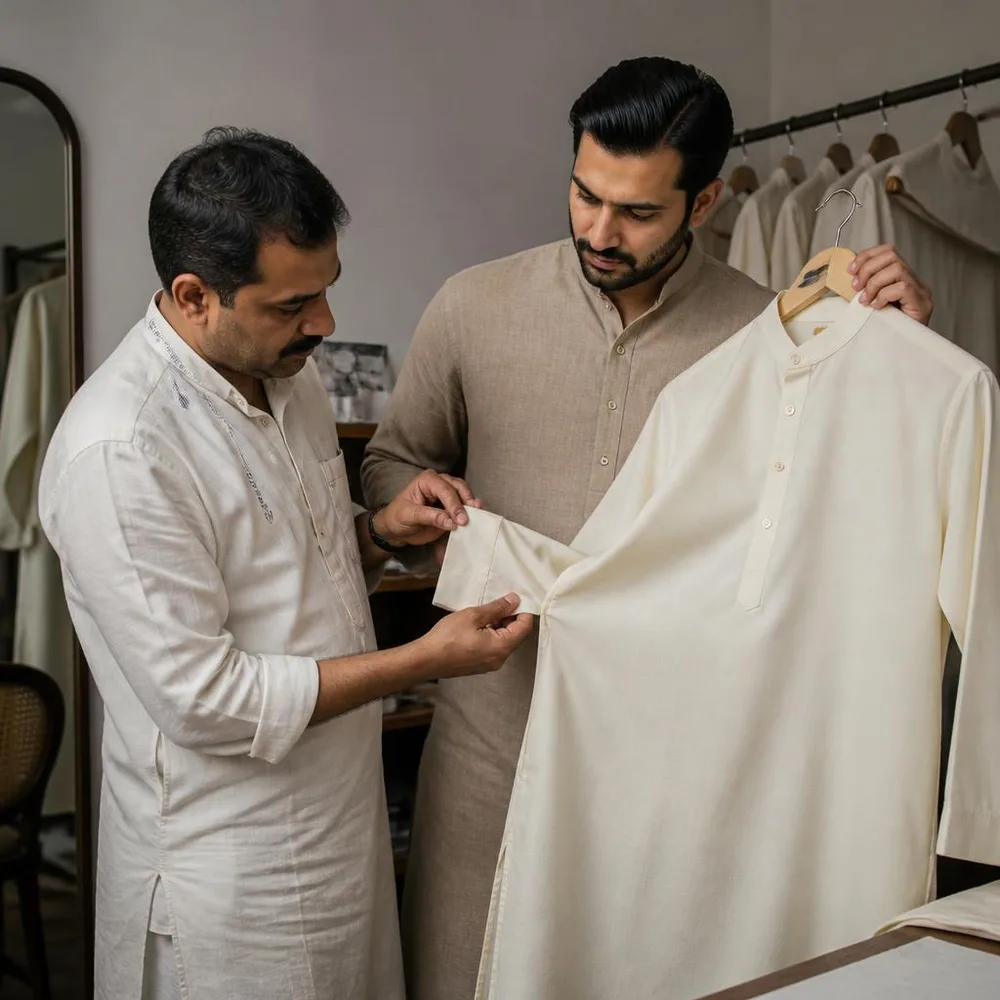
The final handover is more than collecting a garment. It is the moment to check that the kurta pajama matches the brief, feels comfortable on the wearer, and is ready for the occasion it was made for. A few attentive minutes can prevent a small misunderstanding from following the garment home—and can help a piece become part of a family’s longer story.
Try it on, not just hold it up
Wear the underlayer and footwear you expect to use. Check the shoulder line, collar comfort, sleeve length, and how the hem falls when standing. Then sit, reach forward, lift your arms, and walk a few steps. A Muktsari style kurta should feel intentional in movement as well as in a still image. Comfort is personal; the wearer should be part of this review.
Compare it with the approved details
Look at the fabric, colour, buttons, pocket, border, label, or embellishment against the decisions made earlier. Check seams and finishing in good light. If the cloth was customer-supplied, confirm any agreed return of unused material or offcuts. These arrangements should be discussed with the atelier rather than assumed.
Ask about care before the first wear
Ask what the tailor knows about the cloth and its finish, and which care instructions are appropriate. Do not assume a fabric can be washed or pressed in a particular way based on appearance alone. If the composition is unknown, follow a qualified cleaner’s advice and ask the atelier to note any construction details that need special attention.
Keep a record for the future
Take a photo of the garment and save the final design notes, especially if you may commission a related piece later. A new order should be checked against the wearer’s current body and preferences rather than copied automatically from an old size. Bodies, posture, and personal style change.
For a local consultation, compare the questions in the existing Zirakpur guide. A good handover is not a sales moment; it is shared confirmation that the garment is understood and ready for its next chapter.
What if something feels wrong?
Describe the issue clearly and show it while wearing the garment. Ask what adjustment, if any, is possible and what the atelier’s terms are. Do not assume alteration policies are identical everywhere.
Use a five-minute handover routine
Begin by comparing the garment with the written brief, not with a memory of a conversation. Check the chosen colour, collar, sleeve, pocket, closure, and any approved trim. If a reference image was used, remember that it may have shown a different body, fabric, or light; the question is whether the finished garment matches the choices you approved, not whether it reproduces every detail in a photo.
Then try the complete outfit on. Stand naturally, sit, reach forward, lift both arms, and walk a few steps. If the event involves a long meal or ceremony, spend a minute seated. Notice whether the collar presses, a button pulls, the sleeve twists, or the hem feels too short when you sit. Use plain descriptions: “this seam pulls when I reach” is more useful than “the kurta feels wrong.”
Check finishing in good light
Look over the seams, button attachment, hems, and visible edges. Check both sides of a decorative detail and confirm that any customer-supplied cloth or accessory has been accounted for as agreed. If a mark on the fabric is part of its character or was present before stitching, refer to the original notes rather than treating it as a surprise. The purpose is to understand the garment, not to search for imagined flaws.
Raise a concern constructively
If something does not match the agreed design or feels uncomfortable, point to the area while wearing the kurta. Explain when you notice it—standing, sitting, or moving—and ask what options exist. Do not assume every change is possible or included; the fabric, construction, and order terms matter. Ask the atelier to explain any proposed adjustment and its timing before approving it.
If the wearer is collecting the garment through a family member, make sure the wearer still gets a chance to try it on and give feedback. A gift recipient should not have to accept a fit chosen by someone else. For an older family member or someone who needs help dressing, ask what support they want and let them lead the review.
Leave with useful care information
Ask which care instructions apply to the known cloth and any added trim. Keep a copy of the garment brief, final measurements if provided, and any notes about alterations. Do not rely on an internet rule for a fabric whose composition is unknown. For questions after collection, use the contact path and terms the atelier has confirmed.
Handover is a chance to make sure a garment is ready for the life it was commissioned for. When the kurta fits the wearer and the choices are clear, it can join family photographs and become a piece worth keeping.
Make the handover useful to the next wearer
Once the fit is accepted, ask for the garment’s care information and any known limitations of the cloth or added details. Record the date, the final silhouette, and any alteration completed. If the garment belongs to someone else in the family, tell them what was adjusted and where. This is especially helpful when the original wearer is no longer available to answer questions about the cut.
Store the kurta on a hanger that supports its shoulders, or fold it according to the fabric’s needs. Keep buttons or spare accessories in a labeled place. Do not store a damp garment in a sealed bag. For an unknown fabric, ask the atelier rather than applying a generic cleaning method.
If you notice a concern after leaving, take a clear photograph and describe when it appears. Contact the atelier through the confirmed channel and ask how the issue should be assessed. A prompt, specific explanation helps both sides decide whether the matter is fit, care, or a new alteration request.