TS Namdhari Journal
What Fabric Offcuts Mean: Questions to Ask Your Tailor About Leftovers
Understand why tailoring creates offcuts, what small remnants may be useful for, and how to agree in advance on their return or use.
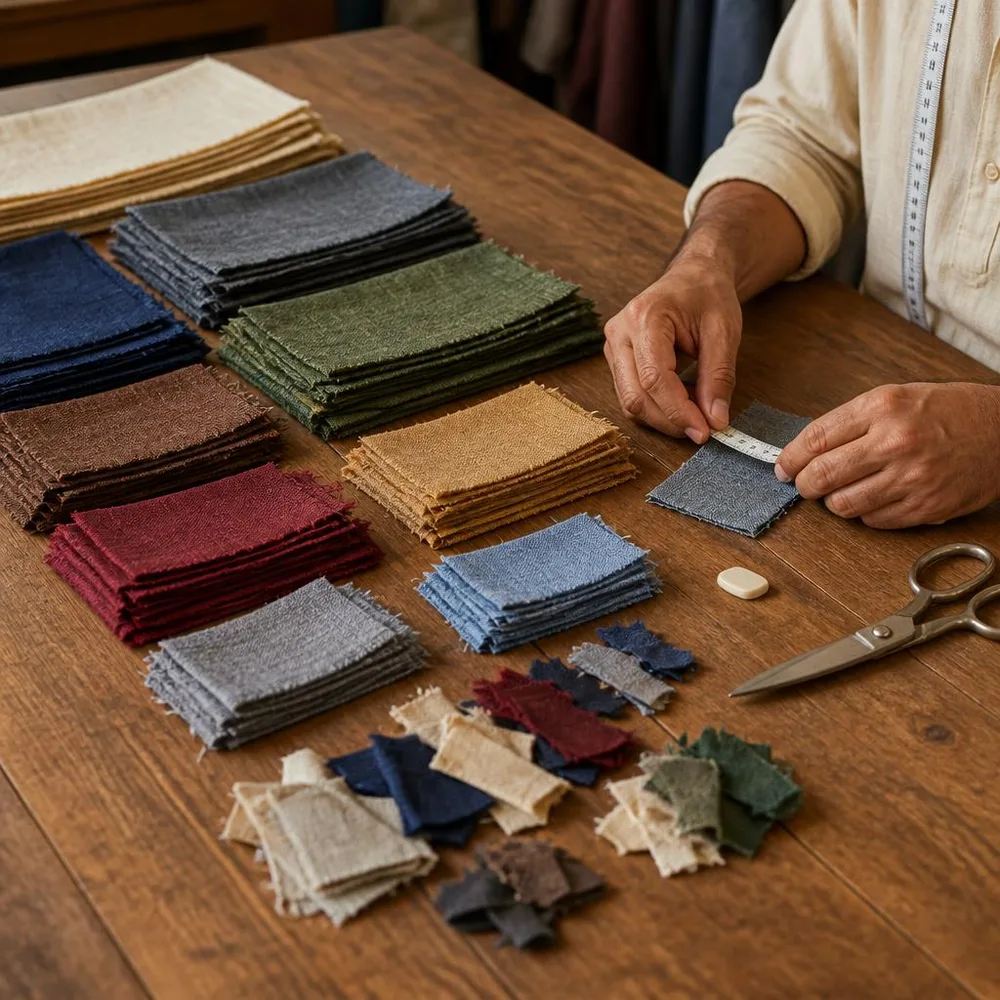
When cloth is cut for a kurta pajama, the pieces that remain are called offcuts. Some are large enough to keep; others are small shapes left by the pattern, the cloth’s width, or the way a motif must be placed. Their presence does not automatically mean waste or a hidden use. The useful question is what the customer and tailor have agreed to do with them.
Why offcuts vary
Pattern pieces must fit the wearer and the design. The amount left over depends on the cloth’s width and length, the kurta’s size, the layout, and whether a border or repeated pattern needs to align. A Muktsari style kurta with fuller proportions may need a different layout from a more streamlined cut. Ask the tailor to explain the pattern plan for your specific cloth rather than relying on a generic yardage claim.
Ask before the cloth is cut
If you supplied the fabric, clarify who retains the unused length, what counts as an offcut, and how those pieces will be returned or stored. If the cloth has sentimental or monetary value, say that plainly. Ask whether a particular remnant could be kept for a future repair, a matching accessory, or simply as a record of the material. The answer depends on the size and condition of the remnant.
Do not assume every remnant can be reused
A small piece may not be large enough for another garment. Reuse is not always possible or appropriate, and no atelier’s policy should be assumed. If you want a remnant preserved, identify it before cutting and confirm the plan in writing. A quick photo of the full cloth and its condition can help everyone remember what was provided.
A better conversation about material
Ask how the layout protects important motifs, what amount is expected to remain, and how unused cloth is handled. Those questions are practical, not confrontational. They help preserve clarity around a material that may carry a family story—and they give the tailor a chance to explain the craft decisions behind the cut.
For ideas about shape and cloth, read the TS Namdhari fabric guide. Confirm any individual atelier’s offcut policy directly before placing an order.
Understand how pattern layout creates leftovers
Before cloth becomes a kurta, its pattern pieces must be arranged across the available length and width. A tailor considers the garment’s proportions, the cloth’s usable edge, any border or directional motif, and areas that should not be cut. When a print repeats or a border needs to align, the layout may leave larger gaps than a plain cloth would. That does not automatically mean the layout was careless; it means the design and material have to be considered together.
Ask the tailor to show the planned layout before cutting if a motif, family border, or limited supply is especially important. For a full kurta pajama set, ask whether the available quantity supports both pieces and any requested details. A generic online estimate cannot account for every cloth width, pattern repeat, size, or design.
Separate offcuts from unused length
Customers sometimes use “leftover cloth” to describe two different things: a continuous length that was not needed, and small offcuts created around pattern pieces. The distinction matters. A usable length may be suitable for another purpose; tiny shapes may only be useful as a repair sample or record. Ask what is expected to remain and how the atelier defines material that will be returned.
Agree on a plan before cutting
If you supplied the fabric, ask who keeps unused length, whether offcuts are returned, and how they will be identified. If a piece is meant to be saved for a future patch or matching detail, mark that request in writing. Do not assume remnants will automatically be used for a pocket, lining, or accessory; those are separate design decisions and may require additional work.
Some customers want every remnant returned; others prefer to leave unusable scraps with the tailor. Both preferences are reasonable. What matters is that both sides know the plan. If the fabric is a family keepsake, a small labeled sample and a photograph can preserve its story even if the remaining pieces are too small to wear.
Ask about the result, not a universal rule
A tailor can explain why a particular layout produced a certain amount of offcut. The answer depends on the garment and fabric, so avoid assuming that one shop’s reuse practice applies to another. TS Namdhari’s fabric guide can help you choose material for a desired silhouette, but the offcut decision should be confirmed for your specific order.
Clear questions protect both the cloth and the relationship. They also make a practical record of a garment’s making, which can matter to the next person in the family who asks where the fabric came from.
Label remnants before they go into storage
If a useful remnant is returned, place it in a clean envelope or fabric bag and label it with the garment, date, and known cloth information. Keep the label factual: “leftover from the kurta order” is safer than naming a fibre that no one verified. Add a small photograph of the original garment so a future tailor can see the colour and placement.
Ask whether the remnant should be stored flat or folded, and keep it away from direct sunlight and damp. A tiny sample can help with colour matching during a repair, but it may not behave exactly like the aged garment after years of washing and wear. The actual kurta still needs an in-person assessment.
If the family wants to use the remnant for a pocket, patch, or another accessory, treat that as a new design decision. Check whether the size and condition are adequate and confirm any extra work before proceeding. A remnant’s sentimental value may be greater than its practical use; it is entirely reasonable to save it rather than cut it again.
Keep ownership clear from the start
If the cloth belongs to another family member, make sure the person who owns it agrees to the layout and remnant plan. This matters when fabric has been inherited or reserved for a future occasion. A person who pays for stitching may not be the only person with a say in whether a keepsake piece is cut. Ask who should approve the plan and include that person before work starts.
At handover, compare the returned remnants with the agreement rather than estimating from memory. If a piece is missing or smaller than expected, ask calmly what happened and refer to the original notes. A clear record supports a practical conversation and helps keep the relationship respectful.