TS Namdhari Journal
Adaptive Punjabi Tailoring: Options to Discuss for Mobility and Easier Dressing
A wearer-led guide to discussing openings, closures, and comfort with a tailor when dressing or movement needs call for different garment choices.
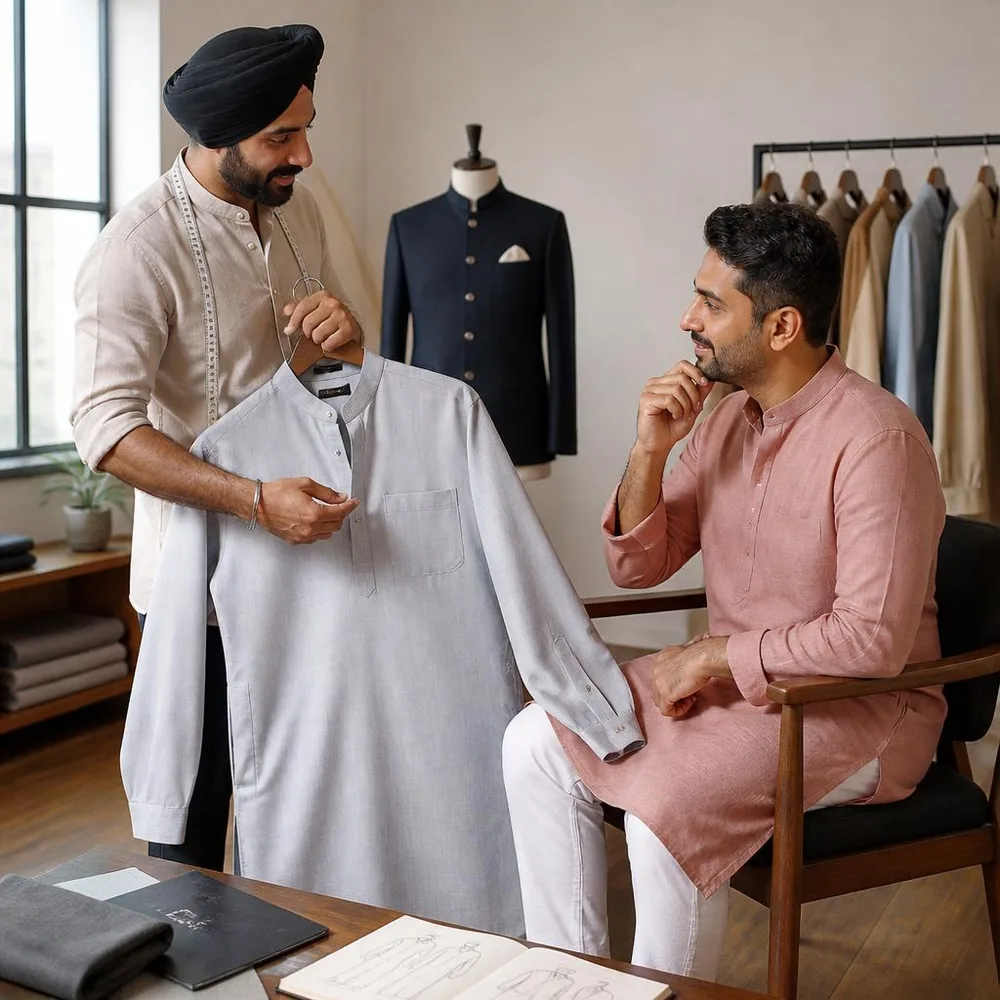
Adaptive tailoring starts with listening. The person who will wear the garment should describe what works, what causes difficulty, and what they want the finished outfit to look like. A family member or support person can help if invited, but the wearer’s preferences should lead. Clothing can support everyday routines without becoming a medical claim or defining someone by a diagnosis.
Describe the task, not only the limitation
Explain when dressing is difficult: reaching behind, lifting an arm, fastening small buttons, stepping into a lower garment, or sitting for a long time. If possible, demonstrate the movement in a comfortable setting. A tailor can then discuss whether a different opening, placement, or fastening may help. The result depends on the wearer and the garment; no single modification suits everyone.
Explore discreet design options
Possible conversations may include a wider opening, an easier-to-reach closure, fewer small fastenings, or a seam positioned to reduce pressure. Ask how each option affects the garment’s look, durability, and care. For a Punjabi kurta, the design should still feel like the wearer’s chosen style—whether that is a fuller Muktsari silhouette or a simpler line.
Prototype before committing
If the change is important, ask whether a temporary mock-up or fitting sample is possible. Test it with the wearer’s usual movements and layers. Get consent before sharing personal information or photographs. If the wearer works with an occupational therapist or other professional, they may choose to involve that person; a tailor should not substitute for clinical advice.
Make approval and care clear
Write down the agreed features, who has approved them, and any care instructions. Confirm cost and timeline directly with the atelier; availability varies and should never be assumed. If the garment uses customer-supplied cloth, discuss the material’s condition before cutting.
The TS Namdhari silhouette guide can help you describe the style you want to preserve while exploring practical adjustments. The aim is a garment that supports autonomy, comfort, and personal expression.
Questions to bring
Which movement should the garment support? Which fastenings are easiest? What does the wearer want to keep unchanged? These questions make the consultation specific and respectful.
Make the conversation specific and respectful
Adaptive tailoring starts with the wearer’s own goals. Ask what is difficult: reaching overhead, fastening buttons, sitting for a long time, using one hand, or managing layers. Do not assume a person needs a particular change because of a diagnosis or mobility aid. If the wearer wants a support person involved, include them; otherwise, keep the conversation private and directed to the wearer.
Describe the movement or task rather than assigning a label. “I need to put this on while seated” gives the tailor a practical starting point. “I need a garment for someone disabled” does not explain the person’s preferences or the exact challenge.
Discuss possible design options
Depending on the garment and the wearer’s needs, a tailor might discuss a wider opening, a different fastening, a smoother interior, or a way to reduce the number of dressing steps. These are topics to explore, not a guarantee that every option is suitable. The tailor should explain what can be made in the chosen cloth and whether the change will affect appearance, durability, or care.
For safety-critical decisions, such as clothing around medical equipment or skin that is easily injured, the wearer should consult an appropriate qualified professional. A tailor can make clothing; they should not diagnose, prescribe, or promise that a construction change is medically safe.
Test the garment in the real routine
During a fitting, reproduce the movements the wearer will use at home, with their consent and any support they choose. Try the garment while seated if that is how it will be worn. Check that closures are reachable, fabric does not bunch in a way that causes discomfort, and the wearer can request help without the design becoming confusing.
If the wearer uses a wheelchair or other mobility aid, ask whether the garment will be worn in that position for extended periods. A tailor can assess drape and length in the actual posture. Keep a note of what worked so future garments do not have to begin from guesswork.
Preserve personal style
Adaptive clothing does not need to look clinical or separate from the wearer’s wardrobe. A Muktsari kurta can retain the fuller line, familiar colour, or preferred detail while adjusting the construction. Choose which visual elements matter to the wearer and let them approve the final design. The goal is agency and ease, not making the person invisible.
For the silhouette, see the TS Namdhari guide. For changes that affect comfort or safety, keep the wearer and any chosen professional in the decision loop.
Write down what works for the next fitting
After the wearer has tried the garment in the actual routine, record which opening, closure, and layer were easiest to use. Note any place where fabric bunched or caught, and whether the issue happened while dressing, sitting, or reaching. Ask the wearer before saving or sharing this information; it may be personal. A simple, consent-based record can spare the person from repeating a difficult explanation at every appointment.
If the first design does not work, treat that as useful feedback rather than a failure by the wearer. Ask which single change would make the biggest difference and discuss whether it is possible without compromising the rest of the garment. A small, reversible adjustment may be preferable to a complete redesign, but the tailor and wearer should decide together.
Make the garment adaptable over time
When appropriate, discuss whether a future alteration could be made without cutting away all flexibility. This depends on the cloth, seam allowance, and construction; do not promise that a garment can always be enlarged or converted. Keep the final order notes and care guidance so another professional can understand how the piece was made.
Most importantly, let the wearer decide whether the design should be discreet or visibly different. Accessibility is not a visual style imposed from outside. The garment should support the person’s routine and still feel like their own Punjabi clothing.