TS Namdhari Journal
Logos, Labels, and Added Embellishment: Approval Before the First Stitch
A small logo, label, or trim can change the character of a Punjabi kurta. Use this approval checklist before anything is attached or stitched.
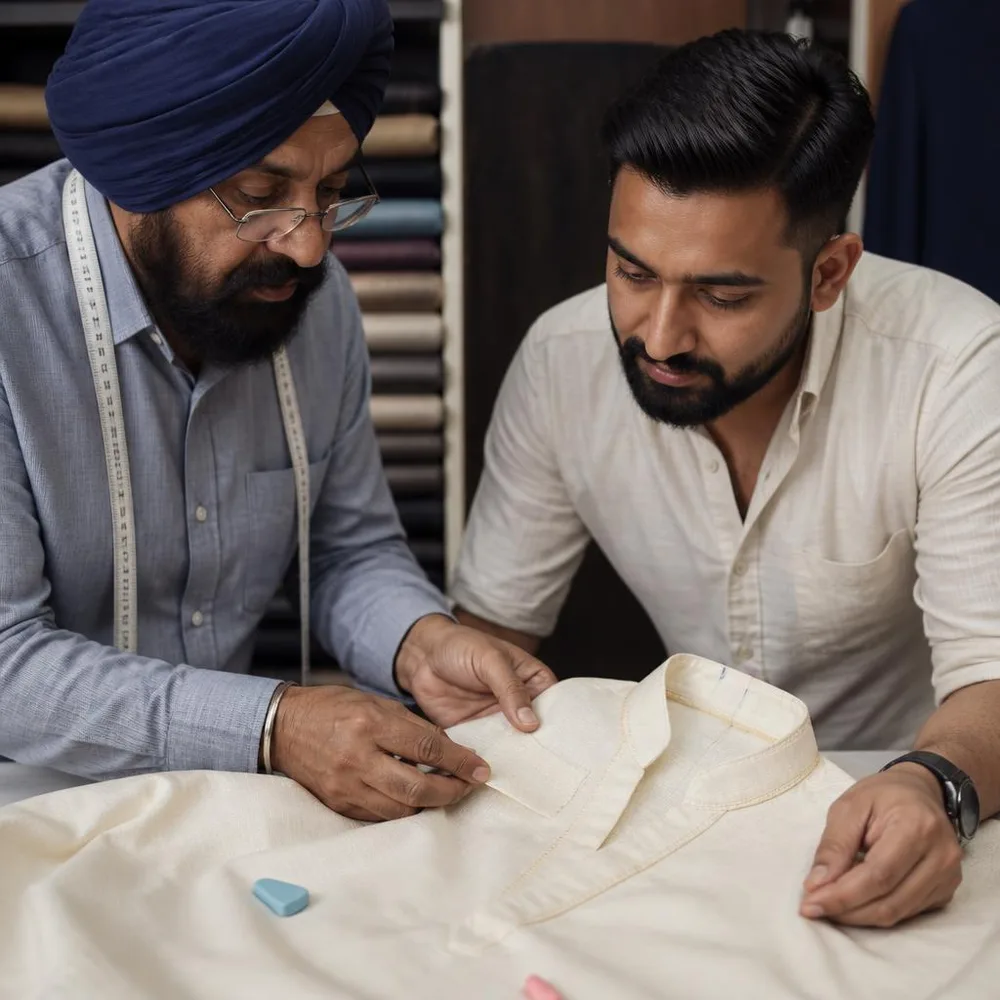
A small added detail can carry a large meaning. A family emblem, a business mark, a name label, or a decorative trim may feel personal to the wearer; the same detail can also change the balance of a Muktsari style kurta. The safest time to decide is before the garment is cut or embellished, while placement and scale can still be discussed without disturbing finished work.
Separate identity from decoration
Begin by asking what the detail is meant to do. Is it there to identify ownership, remember a person, support a team, or simply add visual interest? That answer helps decide whether it belongs inside the garment, near a seam, or in a visible position. A label intended for private recognition does not need the same scale as an exterior emblem.
Agree on the exact version
Bring the artwork or object you want to use. Confirm its final size, colour, orientation, and location. If the material has a backing or adhesive, ask how it might feel against skin or behave after cleaning. Never rely on an approximate reference image when the difference between versions matters.
Check the garment as a whole
Place a paper mock-up or temporary marker on the garment and view it from a normal distance. Look at the detail with the collar, placket, pocket, and any border. Ask whether it competes with the cloth or changes the quiet line of the kurta. Photographing the proposed placement can help the wearer decide later, but written approval should still identify the final version.
Keep a clear approval record
Record the chosen artwork, placement, size, and colour. Note whether the detail is customer-supplied or needs to be sourced, and confirm any added work or cost with the tailor before proceeding. These terms differ from atelier to atelier; this article does not assume a particular policy at TS Namdhari Tailors or elsewhere.
Good tailoring respects the wearer’s story without forcing it into a garment. The legacy can be in a hidden name, a restrained border, or no added mark at all. For the overall silhouette, start with the Muktsari kurta pajama guide, then decide whether an extra detail truly belongs.
Before you approve
Can I change the detail after stitching begins? Ask first; the answer depends on what has already been done.
Should every kurta carry a logo? No. Add a mark only when it has a clear purpose and suits the garment.
Make an approval proof before work begins
Approvals are clearer when they show the actual detail in the intended location. Ask for a paper mock-up, a temporary placement, or a clear photograph of a sample held against the cloth. Review it at arm’s length as well as up close. A small label that looks subtle on a table may become prominent once the kurta is worn; a border that seems balanced in a close-up may compete with the collar in a full-length view.
Check spelling, orientation, colour, size, and distance from seams or edges. If the mark belongs to a family, team, or organization, confirm that the person approving it has authority to use it. A tailor should not be expected to infer permission from a screenshot or an informal message.
Think about comfort and construction
Ask how the proposed material will be attached and what the reverse side will feel like. A stiff backing, rough edge, or raised thread can irritate the wearer or alter how a layer sits. If the detail is close to the skin, test the sample against the body or an underlayer. If the garment will be washed or cleaned, ask whether the added element changes the care instructions.
Placement can also interact with the kurta’s construction. A label near a seam may add bulk; embroidery near a button opening can affect how the front lies; a logo on a pocket can change how the pocket is used. Ask the tailor to point out any construction concern before you approve the visual result.
Use one approval record
Keep the final artwork, placement photo, and written notes together. Mark which version is approved and which versions are discarded. Confirm whether the detail is supplied by the customer or sourced by the tailor, and ask what added work or cost is involved. Do not assume that a first sketch or verbal conversation is the final approval.
If a change is requested after approval, stop and agree on the revised version before work continues. Keep the wearer involved, especially if the detail will be visible. The person who will live in the garment should not discover a prominent mark at handover that they did not choose.
When a detail is not necessary
Sometimes the cloth, silhouette, and finish already carry the story. A hidden name label may be enough for identification; a family keepsake may be better preserved in a different way; an outside logo may distract from the line of a fuller Muktsari style kurta. Leaving a detail out can be an intentional design decision, not a missed opportunity.
For a final check, ask: does the detail serve the wearer, is the approval documented, and will it remain comfortable through the garment’s real use? If any answer is uncertain, pause before the first stitch.
Approval checklist for a visible detail
- Is the final spelling and artwork confirmed by the person who owns or represents it?
- Does the proof show the actual size and position on the garment?
- Have the wearer and tailor checked the reverse side for comfort?
- Is the attachment method suitable for the known fabric and care plan?
- Has any extra work or cost been written into the order?
Keep the answer to each question in one approval message or on one marked proof. A string of short messages can be hard to interpret later, especially when a family group is involved. If two people have different opinions, pause and ask the wearer to make the final style decision. The person who pays may have an important role in the order, but the person who wears the garment should not be surprised by a permanent detail.
Photograph the approved placement before stitching and compare the finished garment with it at handover. If the detail differs, first establish whether the difference is intentional, a fabric limitation, or an error. Then agree on the next step rather than attempting an unplanned removal that could damage the cloth.