TS Namdhari Journal
Baisakhi Menswear: A Punjabi Heritage Look for Spring
Plan a Baisakhi look around the day’s venue, spring weather, and personal style rather than relying on a fixed colour or costume formula.
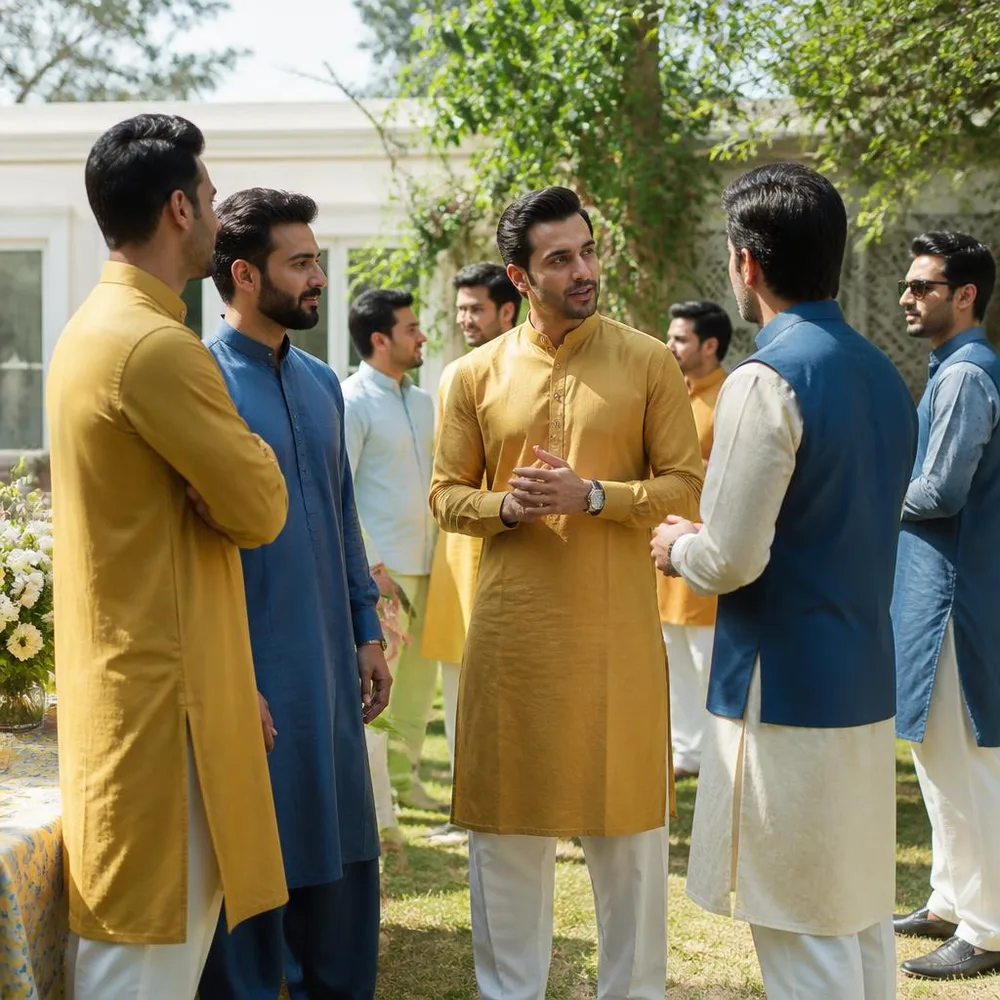
Spring light invites colour, but a Baisakhi outfit still needs to work for the day the wearer has planned. Start with the invitation: where is the gathering, how formal is it, and will the day include travel or outdoor time? A kurta pajama can be expressive without feeling over-styled when its proportions, colour, and layers are chosen with a clear purpose.
Choose a palette that belongs to you
Warm yellows, greens, blues, and ivory can all sit comfortably in a spring wardrobe, but none is mandatory. Consider the event’s requested palette, the cloth already in your wardrobe, and how the colour looks in daylight. If several relatives will be photographed together, coordinate by tone rather than asking everyone to wear an identical outfit.
Balance shape and detail
A fuller Muktsari style kurta has visual presence through its cut. Pair it with a lower garment and footwear that keep the line balanced. If the cloth has a strong print or texture, keep added embellishment restrained. If the garment is plain, a subtle detail can provide focus—but only if it feels natural to the wearer.
Plan for a day outdoors
Check the forecast and consider shade, walking, and seating. Choose a layer that can be removed if the afternoon warms. Test the outfit before the event by sitting, reaching, and walking at a normal pace. A ceremony or family visit is easier to enjoy when you are not adjusting a sleeve or hem throughout the day.
Keep heritage lived, not staged
Punjabi heritage is not a uniform. Families and communities make their own choices, and individuals may connect with a garment through a parent’s style, a remembered colour, or simply the comfort of wearing it. Ask the wearer what matters to them and leave room for that personal answer.
For a guide to the silhouette, read the TS Namdhari Muktsari kurta pajama page. For event-specific expectations, follow the organizer’s information rather than general fashion advice.
One last check
Try the complete outfit in daylight, confirm it is comfortable for the expected hours, and choose accessories that support rather than compete with the kurta.
Start with the day’s itinerary
A spring celebration may include travel, an outdoor gathering, a meal, or several family stops. The outfit should work through the itinerary rather than only at the first location. Ask the host whether there is a requested dress palette, check the forecast, and consider how much walking or standing is expected. Those practical details help narrow the choice before you look at colour or accessories.
If the event is outdoors, test the outfit in daylight. A shade that looks muted in a shop may appear brighter in direct sun. Check that the kurta is comfortable when seated and that the pajama hem will not drag across grass or uneven ground. If you expect the temperature to change, plan a removable layer that complements the garment.
Use colour without relying on fixed symbolism
Spring palettes can include a range of shades, from soft neutrals to more saturated colours. No single hue is required for every Baisakhi gathering. Choose a tone the wearer enjoys and that works with the background if photographs are planned. If the family is coordinating, agree on a range rather than an identical outfit; different generations can wear complementary shades while keeping their own style.
Balance the silhouette with the details
A Muktsari style kurta has a fuller presence, so the lower garment and accessories can remain uncomplicated. If the cloth is patterned, let it be the main feature. If it is plain, a carefully chosen button or restrained edge detail can add interest without competing with the shape. The wearer should approve any embellishment before it is attached.
Keep movement part of the fitting
Try the complete outfit with footwear and any layer. Walk, sit, reach, and greet someone. If the kurta will be worn for many hours, check that the collar and sleeves remain comfortable. A family event is easier to enjoy when the wearer is not thinking about a tight seam or a shawl slipping off.
Ask the organizer about any event-specific expectations; do not rely on a fashion article to explain local or religious practice. For the garment’s shape, continue to the TS Namdhari Muktsari guide. Keep the final choice personal and grounded in the actual plan for the day.
Simple preparation list
Try the outfit in daylight, confirm the weather and venue, test the sitting fit, and pack a practical layer. If a detail carries family meaning, ask the wearer how they want it represented rather than making assumptions on their behalf.
Make a family palette work across different ages
Rather than assigning one shade to everyone, choose a small range and let each person select a version they like. A teenager may prefer a deeper tone, while an older relative may already have a favourite neutral. Bring the colours together through one shared detail—perhaps a shawl, a subtle border, or a similar button finish—only if the wearers want it.
For children, prioritize movement and easy care. For someone who will be outdoors for a long time, consider sun and temperature. For an elder, allow a layer that can be added or removed without a complicated fastening. A coordinated look should not require everyone to accept the same fabric weight or construction.
Use the occasion as context, not a costume prompt
Ask the host whether the celebration has a particular dress expectation. If there is no request, the wearer can decide how traditional or modern they want to look. Avoid adding symbolic claims to a colour or garment unless the family and a reliable source confirm them. A style can carry personal heritage without being presented as a rule for every attendee.
After choosing the outfit, try it in daylight and take a photograph from a few steps away. Check that the colour does not disappear against the venue and that the silhouette reads well in a group. Then stop adjusting for the camera and let the family enjoy the event.