TS Namdhari Journal
Commissioning a Kurta Pajama as a Gift: A Guide for Families
Plan a thoughtful custom kurta gift by learning the recipient’s preferences, allowing for a fitting, and confirming the tailor’s terms before ordering.
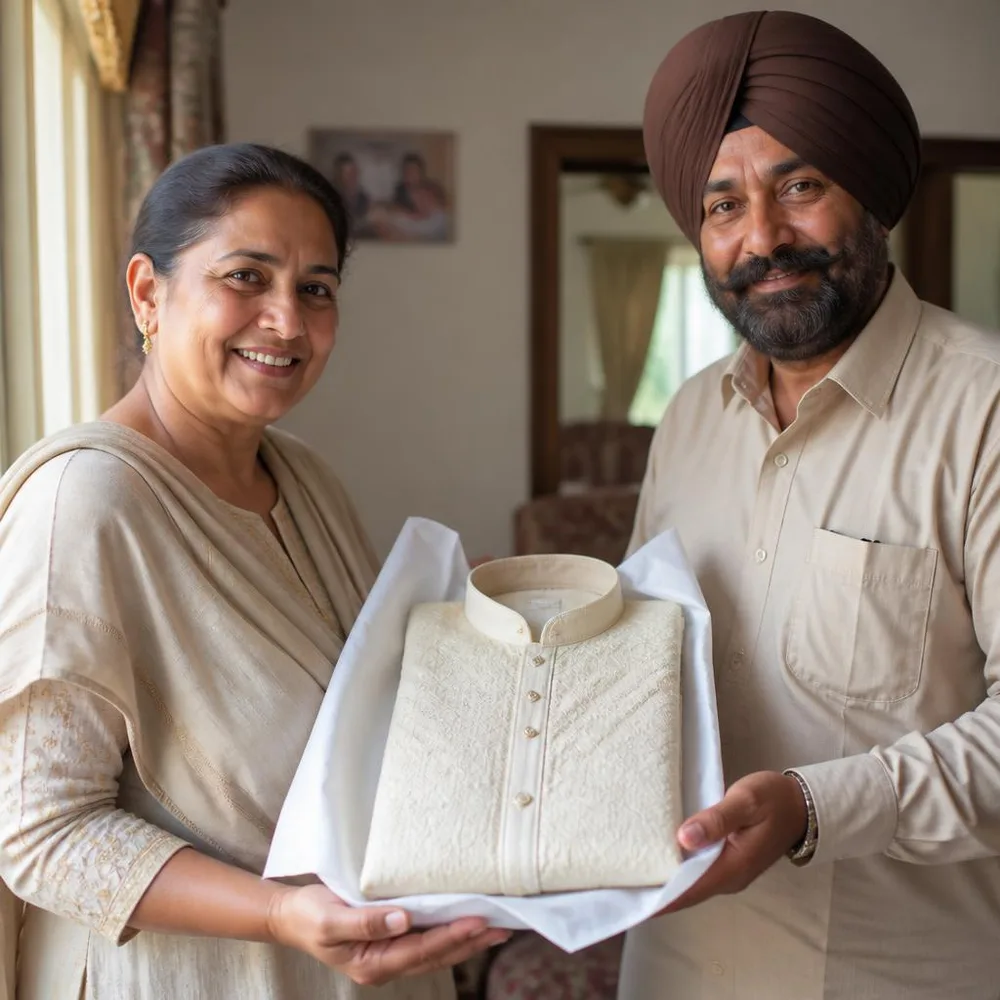
A custom kurta pajama can be a personal gift, but the person who commissions it is not the person who will wear it. The kindest plan therefore starts with the recipient’s comfort and taste—not with a surprise silhouette chosen from a photograph. Whether the gift marks a milestone or simply celebrates family, a little quiet research can make the garment feel considered rather than guessed.
Learn what the recipient actually wears
Look at garments they choose often. Do they prefer a fuller Muktsari style kurta or a simpler line? Which colours do they reach for? Do they like a collar, pocket, or particular sleeve length? If possible, ask someone close to them for guidance. Avoid using one old measurement as a guarantee; fit preferences and bodies can change.
Decide whether the surprise should be the garment or the experience
For a precise fit, the wearer may need to attend a consultation or fitting. That can make the gift a shared experience rather than a fully hidden surprise. Another option is to gift a note offering to commission a garment together. This avoids collecting private measurements without consent and gives the wearer a voice in the design.
Confirm the practical details first
Ask the chosen tailor what information is needed, how cloth is selected, whether the wearer must be present, what is included in a quote, and what timeline is realistic. Do not promise an event date until the atelier confirms it. Gift wrapping, alterations, payment, and cancellation terms also vary, so ask rather than assume.
Give the story with the garment
A short card can explain why you chose the colour, silhouette, or occasion. Keep the note about the recipient, not a claim about heritage they may not share. A garment becomes part of a family legacy when it is worn with meaning, not because it is labelled as traditional.
For shape references, the TS Namdhari Muktsari kurta pajama guide can help start a conversation. If comparing Namdhari tailors or another atelier, confirm current terms directly before committing.
Gift-planning FAQ
Can I order without measurements? Ask the tailor what options exist; a fitting is often the clearest way to confirm fit.
Should I choose the fabric alone? Only if you know the recipient’s preferences and the tailor confirms it suits the intended design.
Choose the kind of surprise carefully
There are two good ways to give a custom garment. One is a finished outfit selected with detailed knowledge of the recipient’s measurements and preferences. The other is an invitation to choose the garment together. The second is often the safer choice when fit, fabric, or style is uncertain. A beautifully wrapped note offering to commission a kurta can be more thoughtful than a finished piece that the recipient feels obliged to wear.
If you do want to commission the garment as a surprise, use a recent, well-fitting piece only as a reference. Do not secretly measure the recipient or share personal measurements without consent. Sizes change, and a tailor needs to know whether the wearer likes ease, a fuller shape, or a closer line. A family member can offer clues, but the wearer should approve the final design.
Build the brief around the person
Think about the recipient’s real wardrobe: colours they wear often, whether they like a collar, what shoes they own, and whether they prefer a Muktsari style kurta or a different silhouette. Note the event or season if the garment is meant for a specific moment. A gift chosen for a real routine is more likely to become part of the person’s life than a piece selected only for a photograph.
Keep a small list of “known,” “guessed,” and “ask the wearer.” For example, you may know their preferred colour but only guess their sleeve length. Bring the known facts to the tailor and leave the uncertain decisions for a fitting or joint consultation. This is a simple way to avoid presenting a guess as an instruction.
Confirm the order terms before promising a date
Ask the chosen atelier what information it needs, whether the wearer must attend, what cloth options are available, and what timing is realistic. Confirm the quote, payment terms, alterations, cancellation conditions, and handover plan directly. These are business-specific and can change; do not rely on a friend’s old experience or assume every tailor follows the same policy.
If the gift is tied to a birthday or ceremony, share that date early and ask whether the schedule is possible. Keep a backup plan in mind, such as presenting the invitation to choose together if the finished garment cannot be confirmed in time. The recipient should not feel that a rushed order is their responsibility.
Make the presentation personal
Pair the garment or invitation with a short note explaining the memory or reason behind it. Avoid claiming that a particular cut is required by heritage or family identity. You might write, “I thought of the kurta you wore with your grandfather,” then let the recipient decide whether that reference belongs in the new garment.
For the silhouette discussion, start with the TS Namdhari guide to the Muktsari kurta pajama. For any order, the final choices should belong to the person who will wear it.
Give the recipient control after the reveal
Present the gift as an invitation rather than a fixed obligation. Let the recipient change the colour, silhouette, or cloth if their preference differs from your guess. If the order has already begun, ask the tailor what decisions remain open and explain them honestly. Avoid promising an alteration or exchange until the business has confirmed the relevant terms.
A small card can explain the intended budget and whether it covers cloth, stitching, and any requested detail. Be transparent about what you have paid and what the recipient may need to decide or contribute. This prevents a thoughtful gift from turning into an unexpected expense or an awkward obligation.
If the recipient decides not to commission a garment, that choice should be acceptable. The gift may still succeed as time together, a family story, or a visit to the atelier. A good gift makes space for the recipient’s taste rather than demanding that they demonstrate gratitude by wearing a particular design.
After the garment is made
Let the wearer try it privately if they prefer. Keep the original notes and ask them to describe any fit concern in their own words. If the item is not right, contact the tailor together and ask what options are available under the order terms. Do not alter the garment at home before that conversation, especially if the fabric is delicate or the issue may be assessed by the atelier.