TS Namdhari Journal
How to Compare an Itemised Quote for a Muktsari Kurta Pajama
A clear way to compare a custom kurta pajama quote: separate cloth, construction, finishing, alterations, and the questions that still need an answer.
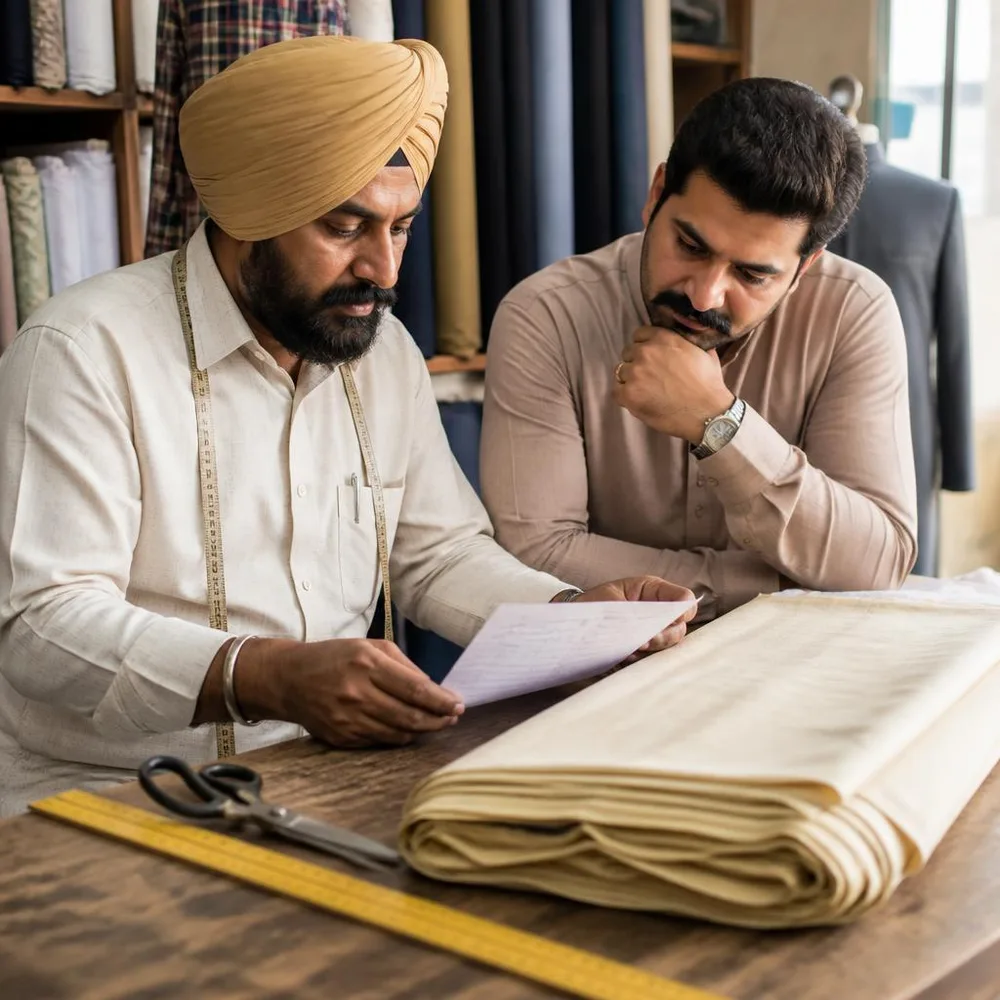
A tailoring quote is easiest to understand when it describes a garment, not just a total. For a Muktsari style kurta pajama, the useful comparison is not simply “Which number is lower?” It is “What is included, what is undecided, and what will I receive at handover?” That distinction matters when a garment is being made for a family occasion and may become part of the photographs and memories kept long after the day.
Start with the garment brief
Write down the occasion, the date you hope to wear it, and the silhouette you have in mind. Note whether the request is for a kurta and pajama together, whether a reference image is only a guide, and which details are essential. A quote can only be compared fairly when each tailor is responding to roughly the same brief.
Separate the parts of the estimate
Ask whether the quoted amount covers cloth, cutting and stitching, lining or other added materials, buttons, finishing, and any later fitting adjustment. If you are supplying your own cloth, ask what the estimate includes without it. Do not assume that two estimates cover identical fabric or the same finishing. If an item is not listed, mark it “to confirm” rather than guessing.
Compare decisions, not just prices
Ask how the chosen cloth affects the drape and the fullness you want. Confirm which design details are included and which would change the estimate. Ask how fitting adjustments are handled, what the expected handover date is, and whether that date is confirmed or only an estimate. These are questions to put in writing; each atelier may have its own terms.
A simple comparison sheet
- Garment pieces and agreed silhouette
- Cloth source and who is supplying it
- Included construction and finishing
- Unconfirmed additions or alterations
- Quoted amount, payment terms, and expected date
Keep the answers beside the quote. The legacy of a well-loved garment begins with a shared understanding, not with an assumption. For silhouette ideas, see the TS Namdhari guide to the Muktsari kurta pajama. To compare a local consultation, use the existing Zirakpur kurta pajama guide rather than treating every search result as equivalent.
Questions to ask
Should every quote include the same details? It should be clear enough to compare, but the tailor should confirm what their own estimate includes.
Can I rely on an event date being met? Ask for a realistic date and confirmation directly; do not treat a general estimate as a promise.
Read two estimates side by side
Imagine that one estimate lists a kurta, pajama, cloth, buttons, and a fitting, while another gives one combined amount. The second figure may be lower, but the two documents do not yet describe the same order. Ask what each line means, whether the fabric is included, and whether the fitting is a measurement appointment or a later try-on. A useful quote lets you see the shape of the commitment before you agree to it.
Keep a small comparison table with three columns: “included,” “not included,” and “need to confirm.” Put each answer in plain language. If an estimate uses a term you do not understand, ask for an explanation rather than filling the gap yourself. This is particularly useful when a family member is arranging the order for someone else, because assumptions can travel between people and become difficult to unwind.
Ask about the design choices that affect the work
Describe the fullness and length you want, then ask whether the proposed cloth and available quantity suit that plan. A reference photograph may show a shape, but it does not tell the tailor what the wearer finds comfortable. Say whether the kurta will be worn for a long ceremony, a meal, travel, or several settings. That context can help the tailor explain which choices are practical and which are purely visual.
Ask how a change in cloth, embroidery, lining, or added detail could affect the estimate. Do not assume that a feature pictured online is part of the quoted design. Ask for any agreed extra work to be written down with the updated amount and timing, then review it before approving the change.
Separate a target date from a confirmed date
When an event is approaching, tell the tailor the date you are working toward and ask for a realistic handover plan. Ask whether the plan includes a fitting and what happens if a decision or material is delayed. A date described as “estimated” is not the same as a confirmed commitment; make that distinction explicit before booking travel or promising an outfit to family.
A quote is not only a price document. It is a record of shared expectations. For a garment that may appear in family photographs for years, clarity about the brief can be part of the legacy too. Read the answers once more with the wearer before approving, especially if someone else selected the fabric or paid for the order.
Decision check
Can you explain, in one sentence, what the quote covers? Do you know which questions remain open? If not, ask for those answers before comparing totals. This simple pause makes it easier to choose a tailor for the quality of the conversation as well as the number on the page.
A simple comparison exercise
Take two estimates and rewrite each into the same headings: garment pieces, cloth, design details, fittings, changes, and handover. Put “not stated” wherever the document is silent. This is more reliable than marking a blank as included or excluded. If one quote includes a cloth allowance and the other expects the customer to bring material, the totals cannot be compared until you understand that difference.
Next, write the wearer’s three priorities at the top. They might be a fuller body, a particular collar, and a comfortable sleeve. Compare each estimate against those priorities, not against an imagined ideal garment. Ask the tailor what choices would need to change if the budget is fixed. Sometimes a simpler finish protects the important silhouette better than cutting cloth quality; sometimes a different cloth makes more sense. The right answer depends on the order.
Finally, read the note aloud to the person who will wear the kurta. If they understand what is being made and what still needs a decision, the comparison has done its job. Keep the approved description with the order so a family member collecting the outfit can refer back to the same expectations.