TS Namdhari Journal
Punjabi Family Portraits: Coordinating Kurta Pajamas Across Generations
Create a family portrait palette that feels connected without dressing every generation in an identical kurta pajama.
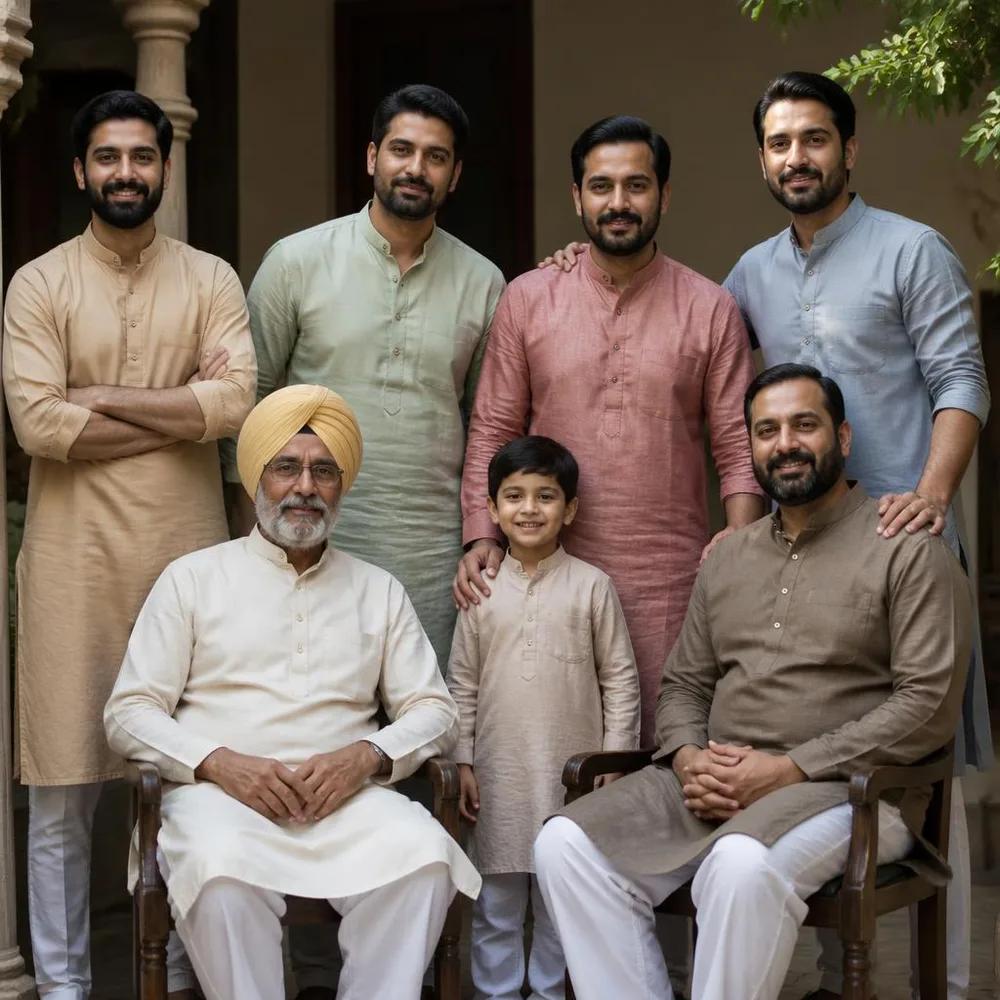
A family portrait should look like the family—not like a row of uniforms. When generations choose Punjabi menswear together, the aim is to create a visual relationship between the outfits while leaving space for age, personality, and comfort. The result feels more like a shared story and less like everyone was handed the same brief.
Choose a palette before choosing outfits
Start with two or three colours that work well together in the location where the photograph will be taken. Consider the background: a bright garden, a pale indoor wall, and a dark studio backdrop all change how colour reads. Ask the photographer about the light and setting. Avoid buying cloth based only on a phone screen; colours can shift between display and daylight.
Coordinate by detail, not by duplication
One person might wear a cream kurta, another a muted blue, and a third a warmer accent drawn from the same palette. A shared element—a similar collar treatment, understated border, or family accessory—can connect the group without making each garment identical. If someone already owns a piece they love, build around it rather than replacing it for symmetry.
Keep fit individual
A fuller Muktsari style kurta may suit one wearer, while another prefers a simpler line. Children need room to move; elders may value ease when sitting or standing. Ask each person what feels good. The image will look more natural when people can move, breathe, and hold their usual posture.
Plan for the photograph and the day
Try complete outfits together before the session, including footwear and layers. Check that patterns do not compete, hems look intentional when seated, and no one is adjusting an uncomfortable sleeve. Bring a lint brush, a spare button, and any accessories that matter to the family. These small preparations keep attention on the people in the portrait.
For one garment’s proportions, see the TS Namdhari Muktsari kurta guide. Let the portrait reflect the family’s own connection to Punjabi dress rather than an imagined rule about how a family should look.
Before the session
Confirm the palette, location, weather, and sitting arrangements with the photographer. Invite each wearer to approve their own outfit; a family image should not require someone to appear in clothing they dislike.
Choose a palette, not a uniform
Begin with one or two colours that feel right for the family and the place where the portrait will be taken. A palette gives the photograph a connected look while letting each person remain themselves. For example, one person might wear a cream kurta, another a muted blue, and a third a small accent in a related shade. These are visual suggestions, not rules about Punjabi clothing or family identity.
Ask each wearer what they already own and what they would enjoy wearing again. A photograph can become an archive of a family’s real style; it does not need identical outfits to feel cohesive. If a new garment is being commissioned, ask the person who will wear it about silhouette, sleeve ease, and preferred length before selecting cloth.
Plan for age and comfort differences
One cut will not suit every body or every person’s mobility. Children may need room to move and sit on the ground. Older relatives may prefer easier closures or a lighter layer. Someone who is sensitive to fabric texture may need to feel a sample before a decision is made. These needs can be handled within a shared palette; matching does not require matching construction.
For a multi-generation photo, think about who needs more time and make the schedule comfortable for them. Bring a chair if the location is outdoors and the host permits it. Keep a warm layer or shade option available. The best picture is not worth asking a family member to endure an outfit that causes discomfort.
Check the location and camera light
Clothing that looks balanced indoors may blend into an outdoor backdrop. Share a location photo with the family before deciding on exact shades. If a professional photographer is involved, ask whether bright prints or reflective embellishment will compete with the setting. Try the outfit at a similar time of day when possible, because natural light changes colour.
Keep details personal
A shared button, border, or small accessory can connect the outfits without putting a logo on every garment. If a detail comes from an heirloom, confirm who owns it and whether it may be altered or attached. Let each person approve visible embellishment. A family should not have to wear a symbol simply because it photographs well.
For the silhouette of a Muktsari kurta, consult the TS Namdhari style guide. For the portrait itself, coordinate the visual mood and keep the wearer’s comfort as part of the plan.
A final fitting check
Have everyone try the complete outfit with footwear, shawls, and other layers. Take a quick group photo on a phone to see whether the colours sit well together. Then let each person make any final adjustment they need. A family portrait carries more meaning when everyone recognizes themselves in it.
Plan the portrait around people, not just outfits
Choose a time when children and older relatives are least likely to be tired, and keep the session short enough for everyone to remain comfortable. If the location involves steps, grass, or a long walk, tell the family in advance so they can choose appropriate shoes and layers. Bring a chair or water if the photographer and venue allow it.
Make a quick list of who should be in the photograph and which combinations matter. That prevents a long session from becoming stressful. If someone does not want to be photographed, respect the choice. A family image can be meaningful without requiring every relative to participate.
Review details before the photographer arrives
Check that collars lie flat, buttons are fastened, shawls are secure, and pockets are not overloaded. Keep a small lint brush nearby for dark cloth and a clean cloth for glasses. Let each person make final adjustments themselves or with help they choose. Avoid changing someone’s outfit for the photograph without asking.
After the session, note which garments were comfortable and which details the family wants to remember. If a custom kurta is being commissioned for a future portrait, those observations are a useful design brief rather than a vague reference to “the family photo look.”