TS Namdhari Journal
Customer-Supplied Fabric: Confirming Ownership, Use, and Care Before Stitching
Before handing over personal cloth for a Punjabi kurta, agree on its condition, intended use, handling, and what happens if the material proves difficult to work with.
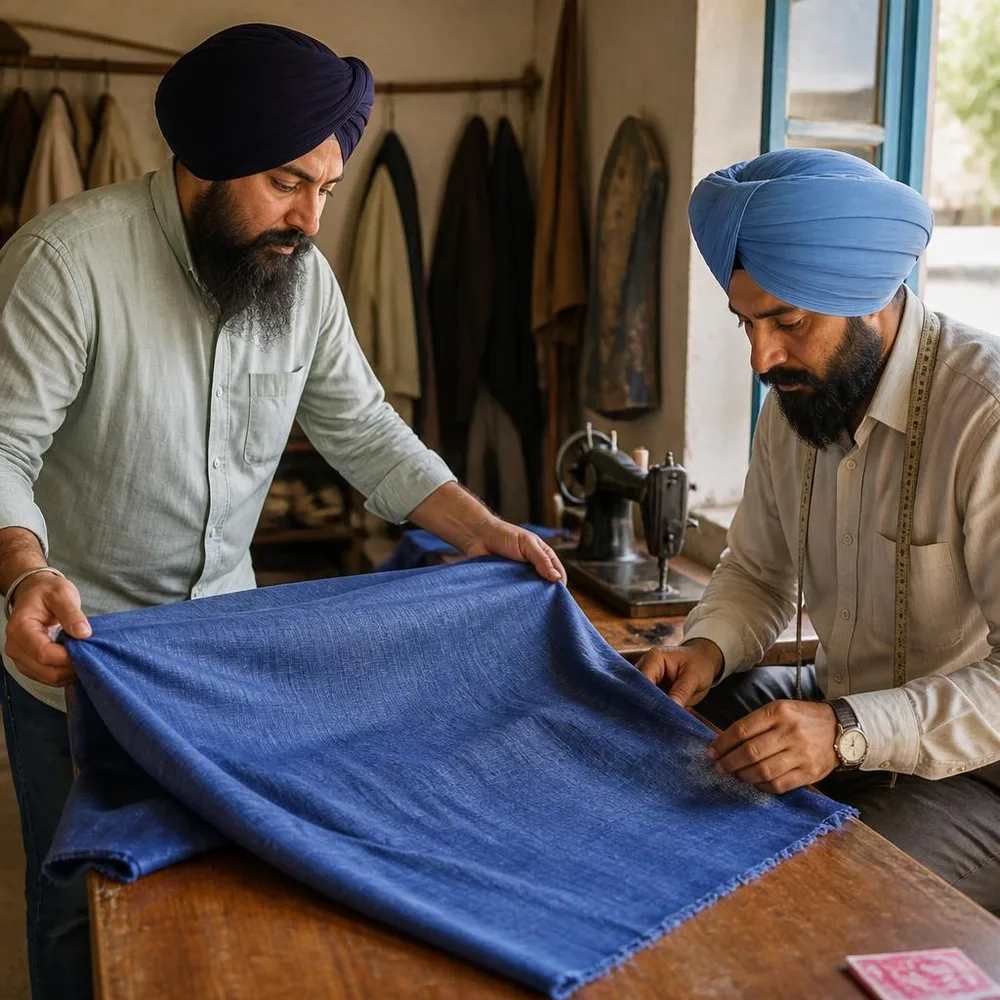
A length of cloth brought from home can carry more than colour and texture. It may be a gift, a family remnant, or fabric chosen for a reason only the wearer knows. Before it becomes a kurta, both customer and tailor need a clear conversation about what the cloth is, how much there is, and what the customer hopes it will become. That is especially important when the material cannot easily be replaced.
Describe the cloth before it leaves your hands
Bring the full piece if possible. Note where it came from, whether it has been washed or stored, and whether any portion has already been cut. If its composition is unknown, say so. A photograph in natural light can help document its colour, print, and visible marks. Do not label a fabric as silk, cotton, handwoven, or pure unless you have reliable information.
Agree on the intended use
Talk through the garment and the areas that matter most: the front, sleeves, collar, border, or a repeated motif. Ask the tailor to identify stains, weak areas, uneven dye, or limited yardage before cutting. A pattern may need to be adapted to the available quantity. Ask what options exist before approving any irreversible cut.
Clarify handling and ownership
Make sure you understand who is responsible for the cloth while it is being assessed and worked on, how any unused length will be returned, and how offcuts will be handled. These are not assumptions to make from one shop’s practice to another. If the fabric has sentimental value, say so plainly and ask whether the proposed construction is appropriate for its condition.
Make a brief both sides can use
Record the garment, the agreed design, any areas to avoid, the quantity received, and the approvals still needed. A short written summary protects the memory attached to the fabric as well as the practical details of the order. It also gives Namdhari tailors—or any atelier you choose—a shared reference when the work begins.
For general silhouette and fit, consult the TS Namdhari guide to the Muktsari kurta pajama. The best result is not a promise that every cloth can become every design; it is an informed decision made before the scissors touch material.
Useful questions
What if I do not know the fabric composition? Tell the tailor it is unknown and ask what can be assessed from the cloth itself.
Should I approve the layout before cutting? If motifs, borders, or family details matter, ask to review the proposed layout first.
A careful fabric review before the appointment
Lay the fabric flat on a clean surface and inspect both sides in natural light. Photograph the full piece, then take close images of stains, fading, loose threads, holes, or uneven colour. If the cloth has a border or repeat, photograph that too. These pictures are a memory aid, not proof of composition or value, but they help both parties refer to the same visible condition later.
Measure the length and width without stretching the fabric. If you have a label, receipt, or information from the original seller, bring it along. If you do not, say that the material is unidentified. Guessing that it is silk, cotton, or handwoven can lead to a mismatch in expectations about drape, care, and the kind of garment it can support.
Give the tailor a clear priority order
Point out which part matters most. It might be preserving a family border, keeping a motif centered, avoiding a worn area, or making sure enough cloth remains for a future repair. A single piece may not support every design feature in a reference picture. Ask the tailor to explain the layout before cutting and to identify the trade-offs in plain language.
If the fabric is emotionally important, make that part of the brief. A tailor can then discuss whether the condition and available quantity make the requested cut sensible. Sometimes a simpler design protects more of the original material; sometimes the cloth is not suitable for the intended use. Being told that before work begins is more respectful than discovering it after a cut has been made.
Record custody and return expectations
Before handing over cloth, write down what was received and what is expected back. Ask how unused length and offcuts are handled, whether any sample is needed, and how the fabric will be stored while work is underway. Confirm who should be contacted if the tailor finds a defect or needs an approval. These arrangements vary by business, so put the answer in the order notes rather than relying on a general assumption.
When the garment is ready, compare it with the approved layout and ask for any remaining material that was agreed to be returned. Store the original photos and notes with the garment record. A family’s textile story often includes more than the finished kurta; the notes can preserve where the cloth came from and why it mattered.
When the material is a family keepsake
Consider whether the cloth needs to become a full garment at all. A small, meaningful section may be better preserved as a pocket detail, a lining accent, or an archive piece, if the wearer and tailor agree the material can support it. Do not assume every keepsake can be reused safely. The owner’s priorities should decide whether the goal is wear, preservation, or simply a careful assessment.
Make a small fabric record
A practical record can be brief: date received, owner’s name, approximate measurements, visible condition, and the design intention. Add photographs of the full piece and any area that should be avoided. If a border must remain visible, mark its direction in a sketch. Do not write a fibre composition unless it is supported by a label or a reliable source.
At the consultation, ask the tailor to repeat back the most important instruction. “Keep this border at the sleeve” is more actionable than “make it traditional.” If the requested layout cannot fit the available material, ask to see an alternative before anyone cuts. You can then decide whether to change the design, source more cloth, or keep the material unused.
After the garment is handed over, store the record with the care notes. If the piece later needs repair, the next tailor can see which sections came from the original cloth and what the family wanted to preserve. A few clear notes can prevent a future repair from sacrificing the very detail that made the material special.