TS Namdhari Journal
Gurpurab Attire for Men: Respectful Punjabi Dress for a Community Gathering
Choose a Gurpurab outfit with care by following the host or gurdwara’s guidance, prioritising comfort, and avoiding assumptions about religious dress.
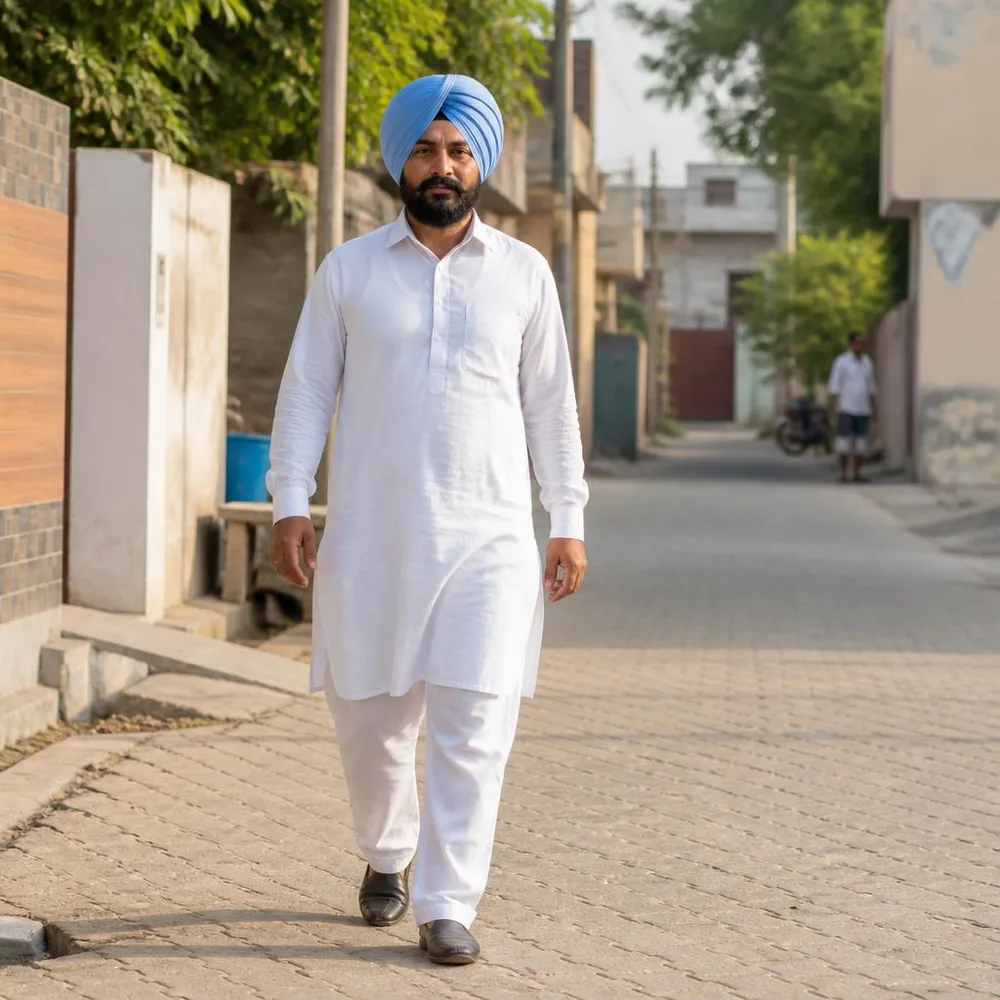
When attending a Gurpurab gathering, the most respectful clothing choice begins with the community and venue hosting it. Practices and expectations may differ, so ask the organizer or gurdwara if you are unsure. This article offers general wardrobe planning—not religious instruction and not a list of rules for every Sikh community.
Ask about the setting
Find out whether the visit includes time inside a gurdwara, an outdoor gathering, or several locations. Follow the venue’s posted guidance and the host’s advice. Do not rely on a fashion article to decide what is appropriate for a religious space. If a head covering is requested, ask the venue about its usual practice rather than treating one style as costume.
Choose comfort and restraint
A clean, well-fitting kurta pajama can be a considered choice for a community gathering. Keep embellishment and accessories in balance with the setting. The aim is not to attract attention; it is to be comfortable and present with others. The wearer should be able to sit, walk, and participate without needing to adjust the garment constantly.
Respect identity in photographs
Ask permission before photographing people, especially in a place of worship or during a devotional moment. Avoid using religious symbols as styling props or adding them to clothing for visual effect. A photograph of a gathering should reflect the people’s own choices, not a fashion team’s idea of tradition.
Let the wearer decide what feels right
Personal dress can carry faith, family, and identity. Ask the wearer what they want to communicate, and do not infer religious beliefs from clothing. If someone chooses a Muktsari style kurta, let the style remain a garment choice rather than a statement imposed by others.
For garment proportions, consult the existing TS Namdhari Muktsari guide. For event-specific expectations, follow the host and venue. This keeps tailoring advice in its proper place and honours the community’s own guidance.
Before you go
Confirm the venue’s guidance, plan for the weather and travel, and choose clothing that allows you to take part comfortably. When in doubt, ask rather than assume.
Follow the venue’s guidance first
A Gurpurab visit may involve a gurdwara, a community hall, a family home, or several locations. The expectations for each setting should come from the people responsible for that place. Check the venue’s current information and ask the host if you are uncertain. This article is not a religious guide and does not set rules for Sikh dress or worship.
If a head covering or footwear arrangement is required by the venue, follow its instructions. Do not treat the practice as a styling accessory or use religious symbols as fashion props. When making photographs, ask permission and respect any rules about photography in the space. The people attending should decide how they wish to be represented.
Choose clean, comfortable clothing
A simple kurta pajama can be a considered choice when it suits the setting and the wearer. Check that the fabric feels comfortable through sitting and standing, and that the wearer can move without fuss. Avoid adding a heavy layer or elaborate trim just to make the look seem more formal; a gathering is not a fashion competition.
Personal style varies. One person may choose a fuller Muktsari kurta, another a plainer silhouette, and another clothing they already own. None of those choices should be interpreted as a statement about someone’s beliefs or level of observance. Ask the wearer what they feel comfortable wearing and let the host’s guidance answer questions about the venue.
Be thoughtful about colour and detail
There is no single colour formula that applies to every Gurpurab. If the organizers have requested a palette, follow it; otherwise, choose colours the wearer likes and that suit the day’s setting. Keep visible logos, slogans, or decorative marks out of the outfit unless the wearer has a clear reason for including them and the venue permits them.
Make the visit easier for everyone
- Confirm location-specific guidance before arriving.
- Wear footwear that is easy to manage if the venue requests it.
- Choose a layer that can be removed without disturbing the outfit.
- Ask permission before photographing people or sacred spaces.
The TS Namdhari guide to the Muktsari kurta explains silhouette only; the community and venue remain the source for religious or event-specific expectations. Dressing respectfully begins with listening.
Separate clothing advice from religious instruction
People attending a Gurpurab may have different levels of familiarity with a venue’s customs. A clothing article can suggest that visitors ask and listen; it cannot tell every reader what a Sikh community expects. For questions about worship, ceremony, or the meaning of a practice, consult the gurdwara or a trusted Sikh community source. Do not use a tailoring appointment as a substitute for that guidance.
If you are attending with someone who knows the venue, ask them to explain the practical steps before you arrive. This can include where to place footwear, whether a head covering is available, and whether photography is appropriate. Follow the venue’s current directions, which may differ from assumptions based on another place or an earlier visit.
Keep the outfit calm and functional
Try the kurta with any required layer or head covering so the whole outfit feels comfortable. Check that sleeves do not interfere with movement and that the wearer can sit through the visit. Choose footwear that is easy to manage if the venue asks visitors to remove it. Keep bags and accessories simple so they do not become a distraction.
The wearer should choose the level of formality. A plain kurta can be appropriate; so can a more dressed-up outfit if the person prefers it and the venue’s guidance allows it. Respect is shown by listening to the community and treating people and space thoughtfully, not by copying a specific colour from a photograph.
Check before sharing images
Ask permission before taking or posting photographs of other visitors. Avoid photographing worship or a sacred space if the venue does not permit it. A social caption should not imply that a person represents every Sikh or every Punjabi family. Keep the description about the individual wearer and the event they chose to attend.