TS Namdhari Journal
Planning a Custom Kurta Delivery Date Around a Family Event
Plan a custom kurta order around a family occasion with a clear brief, realistic checkpoints, and a confirmed date rather than last-minute assumptions.
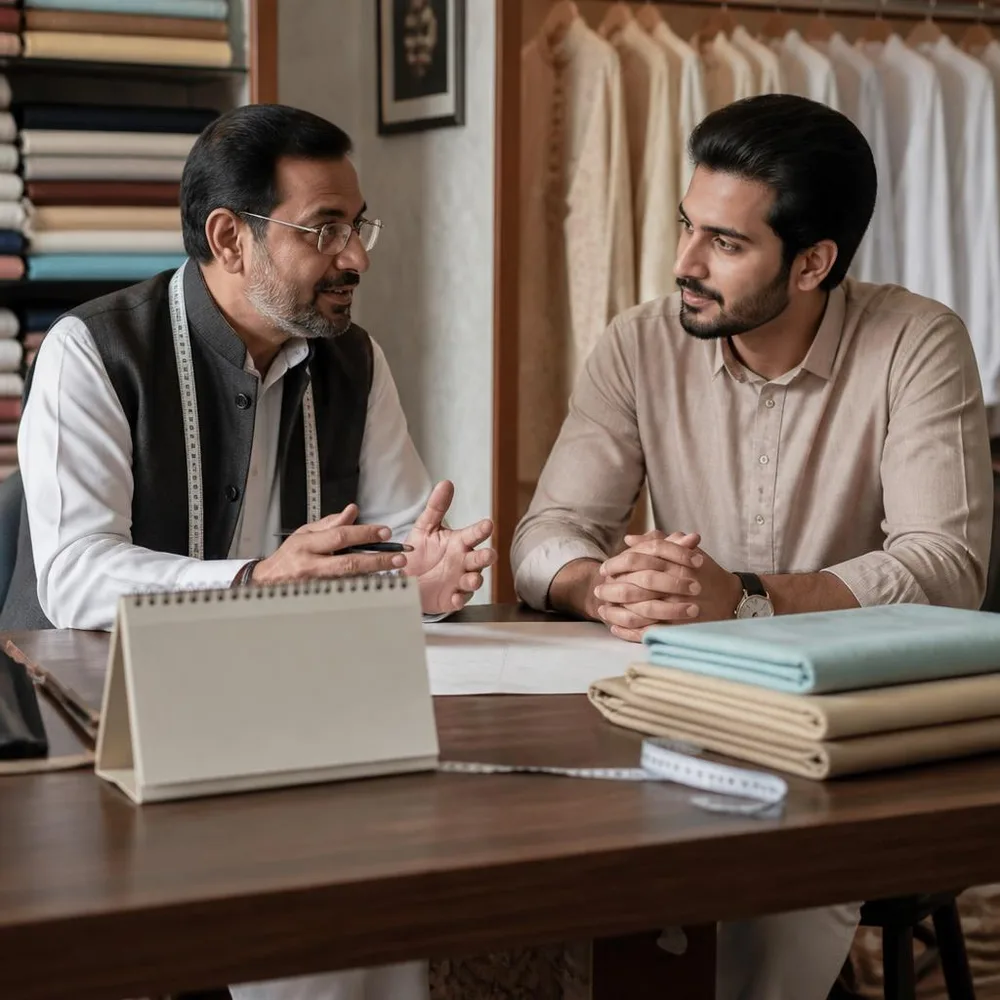
A family event can make a new kurta feel especially meaningful—and can make the calendar feel unforgiving. The most helpful plan begins with the date you need the garment, then works backwards through decisions that take time: choosing the silhouette, agreeing on cloth, confirming details, attending fittings, and allowing for a final review. A date written on a calendar is a target; only the tailor can confirm what is realistic for a particular order.
Begin with the occasion, not a guessed lead time
Tell the tailor what the event is, where you expect to wear the garment, and the date you need it ready. Mention travel, photography, or a sequence of family functions if those affect when you can attend a fitting. Do not assume every order follows the same timetable. Workload, cloth availability, design complexity, and fitting needs can differ.
Resolve decisions early
Bring reference images, but explain what you want from each one: the fuller line of a Muktsari kurta, a particular collar, or a restrained colour. Decide who is supplying fabric and who must approve the design. If several relatives are involved, choose one person to keep the final brief and relay changes so the tailor is not working from competing instructions.
Protect time for a fitting
Ask when a fitting is expected and whether the wearer must be present. Try the garment with the footwear or layers planned for the event. Sit, reach, walk, and raise the arms; the garment should work through the day, not only in a standing photograph. Leave room in your own schedule for this review.
Write down the confirmed plan
Record the agreed design, outstanding choices, fitting plan, and confirmed handover date. If the plan changes, ask the atelier to confirm how the revised date affects the order. This is good coordination, not a guarantee: avoid booking travel or making promises to family on an unconfirmed estimate.
A well-planned garment can join the family archive long after the event. If you are exploring the fuller silhouette, read about the Muktsari kurta pajama before your consultation.
One useful question
How early should I place an order? Ask the chosen tailor directly, sharing the event date and design brief; only they can assess current availability.
Build a backward plan you can actually follow
Start with the day you want to wear the garment, then list the decisions that must happen before it. First comes the brief and cloth choice; next, design approval and measurements; then cutting, construction, fitting, and any agreed corrections. The tailor should confirm which of these stages applies to the order and what timing is realistic. Do not assign a number of days to each step from someone else’s experience—the cloth, design, workload, and fitting needs can differ.
Write down your own constraints too. If you will be travelling, note the departure date. If the wearer is available only on certain evenings, say so at the first conversation. If relatives need to approve a colour, ask them before the appointment rather than after the cloth has been selected. A schedule can only be useful when the people who make decisions are available for them.
Protect the fitting window
Many customers think of the fitting as a final formality. It is better to treat it as a planned checkpoint. Ask whether the wearer needs to attend and what clothing or footwear to bring. Reserve enough time to move naturally in the garment and describe any discomfort clearly. If a fitting is not part of a particular order, ask what the review process is instead; do not assume the same sequence applies to every garment.
Keep the event outfit simple enough to test. Wear the underlayer planned for the day and bring a jacket, shawl, or waistcoat if one will be used. A collar that feels fine in a bare-neck fitting may feel different with a layer underneath. These details are easier to address before the event than in a hurried change room.
Make room for decisions to change
A family may change the event time, the wearer may choose another colour, or the cloth may prove unsuitable once inspected. Treat the timeline as a shared plan that can be updated, not a promise detached from the work. If a decision changes, ask which steps are affected and request a revised handover date in writing. This gives everyone the same information.
What to include in your order note
- Event date and when the garment is actually needed
- Wearer, preferred silhouette, and the occasion’s level of formality
- Cloth source, open design questions, and who approves them
- Fitting plan, confirmed milestones, and the atelier’s current estimate
A family garment can become part of a legacy because it was made with care and worn with ease. The best preparation is the unglamorous work of clear decisions and realistic timing. If the chosen design is a Muktsari kurta, review the TS Namdhari guide before the conversation so you can name the proportions that matter to you.
Build a buffer for family decisions
Families often need time to agree on a colour, show a sample to someone who lives elsewhere, or arrange for the wearer to attend a fitting. Put those decision windows into the plan instead of treating them as instant approvals. If a design needs one person’s sign-off, name that person at the beginning. This reduces the chance that a completed garment is held up by a late change from a relative who was not part of the original brief.
Keep a short status note with three labels: completed, waiting for approval, and next confirmed step. Update it when the cloth or design changes. A clear note is more useful than repeated messages such as “Any update?” because it identifies the exact decision that is blocking progress.
When the event date is close, agree what happens if a fitting reveals an adjustment. The tailor can explain what is possible and when; the family can decide whether a backup outfit is sensible. Planning a backup is not pessimism. It protects the event from depending on an unconfirmed assumption.