TS Namdhari Journal
Punjabi Garment Terms: Kurta, Pajama, and Tehmat Explained
A plain-language guide to three Punjabi menswear terms, how the garments differ, and what to clarify when describing a look to a tailor.
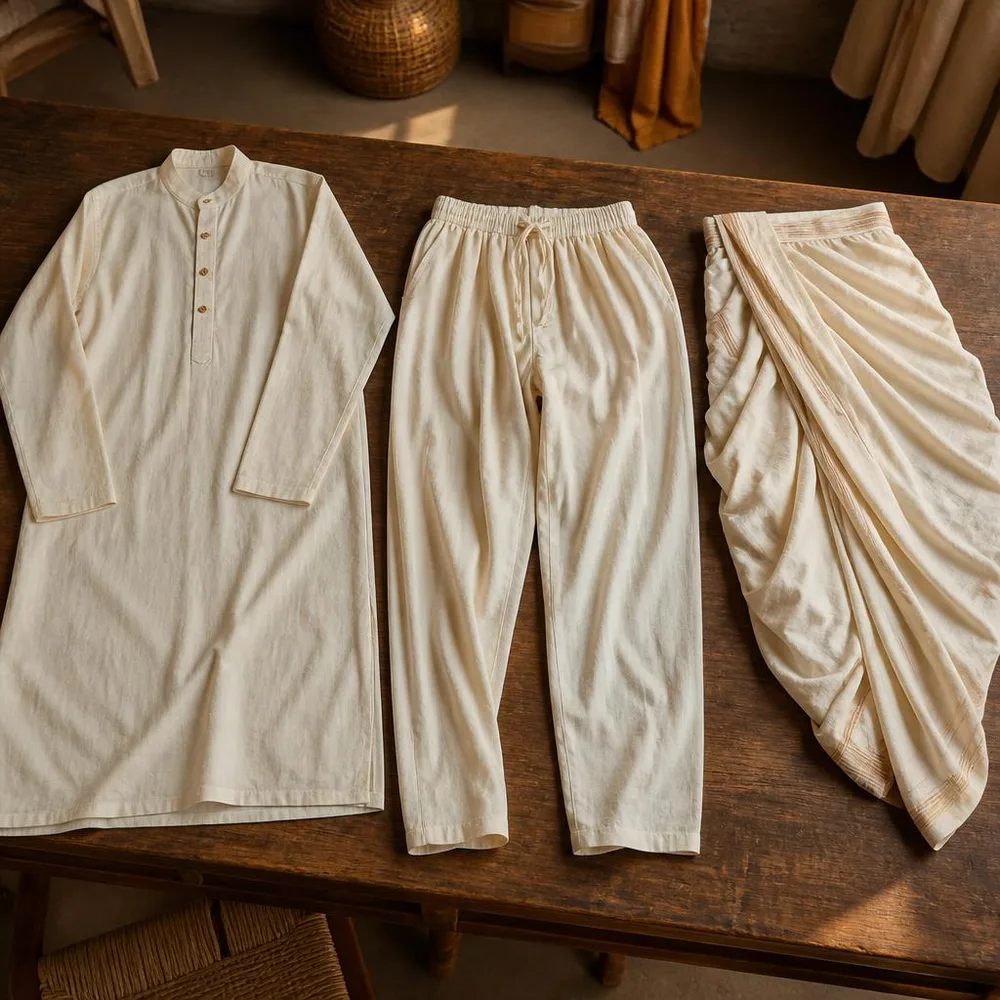
Shopping for or commissioning Punjabi menswear can involve familiar words used in different ways by different families. “Kurta,” “pajama,” and “tehmat” are not interchangeable labels for one outfit. Knowing what you mean by each helps you describe a look clearly—and keeps a reference photo from doing all the talking.
Kurta: the upper garment
A kurta is the tunic-like upper garment. Its length, fullness, collar, opening, sleeve, and side slits can all vary. A Muktsari style kurta is often associated with a fuller silhouette, but exact preferences differ; the existing Muktsari kurta pajama guide explains that style in more detail. When speaking with a tailor, point to the feature you want rather than relying on a broad label alone.
Pajama: the lower garment
In a kurta pajama set, the pajama is the lower garment. Its cut and ease affect how the whole outfit moves and reads. Show how you expect to wear it—standing, seated, walking, or for an active day—and ask what proportion works with the kurta length you have chosen.
Tehmat: a different kind of drape
A tehmat is a wrapped lower garment rather than a stitched pair of trousers. How it is wrapped, secured, and worn depends on personal and regional practice. If you are interested in one, use a clear reference and ask someone familiar with that specific form to explain the details. This article is a vocabulary introduction, not a complete history or a set of rules.
Describe the outfit in a useful way
Tell the tailor which garment you mean, what you like about the reference, what you want changed, and how the outfit needs to function. A photo can show proportion; a few sentences can explain comfort, occasion, and preference. That combination creates a better brief than a keyword alone.
For construction details, continue to the TS Namdhari kurta pajama anatomy guide. To discuss a custom garment, verify the current service details with the atelier directly.
Quick answers
Are kurta and pajama one garment? No. They are the upper and lower parts of a commonly paired outfit.
Can terminology vary? Yes. If a word means something specific in your family, explain or show the intended garment.
Turn vocabulary into a useful design brief
Instead of saying only “I want a Punjabi outfit,” describe the pieces and the use. For example: “I want a kurta with a fuller body, sleeves that allow easy movement, and a pajama that sits comfortably when I am seated.” That sentence tells a tailor more than a broad category. A reference photograph can support it, but add a note about which parts of the image you like and which you do not want copied.
If you are discussing a tehmat, explain whether you want to wear one or are simply asking about the term. A tailor may not make every garment form, and the proper construction depends on the wearer’s reference and local practice. Ask a knowledgeable family member to demonstrate or explain if the form is unfamiliar; do not rely on a cropped photo to guess how it is secured.
Three details to clarify at a consultation
- Silhouette: Is the kurta straight, fuller, longer, or more fitted than your current one?
- Movement: Will you sit for long periods, walk, perform, or layer a waistcoat?
- Pairing: What lower garment, footwear, and outer layer will you wear with it?
These answers help keep the upper and lower pieces in proportion. They also prevent a tailor from having to infer your preference from a name that may mean different things in different conversations.
Use family language with care
Some families have a preferred word for a garment or a particular way of describing a fit. Preserve that language if it is meaningful, but explain it for anyone who does not share the same vocabulary. If the garment is part of a family celebration, ask the wearer how they want it described. A caption or product label should not claim a regional or historical meaning that the wearer has not confirmed.
The TS Namdhari Journal’s kurta anatomy guide covers construction details; this glossary is narrower and explains the basic garment terms. Together, they can help you turn a family conversation into a clear request.
A quick example
Rather than asking, “Can you make this?” point to the reference and say, “I like the room through the body and the clean collar, but I want the sleeve less loose. I will wear it with a pajama and a sleeveless layer.” That brief is specific enough to discuss without pretending that a photo supplies every measurement or construction choice.
Questions that prevent a mismatch
Before an order is recorded, ask the tailor to name each piece and repeat the design in everyday language. Confirm whether the request is for a kurta only, a kurta pajama set, or a tehmat. Then describe the wearer’s preferred fit and the occasion. This catches a simple but costly misunderstanding: two people may use the same outfit name while imagining different garments.
If a family word has a specific meaning at home, write down the family’s explanation alongside the commonly used term. A future reader can then understand the distinction without claiming that the family’s wording applies to all Punjabi speakers. If a term is unfamiliar, ask the person who uses it rather than turning to a one-line search result and assuming that every region uses it in the same way.
Use a small drawing if the garment is difficult to explain. Mark the hem, opening, waistband, or border the way the wearer understands it. A sketch is not a pattern; the tailor will still need to translate the idea into construction. It can nevertheless make a consultation much more precise.
Keep the glossary modest
Words shift across families, regions, and generations. A glossary can offer a starting point, but it should not rank one pronunciation or garment description as the only correct one. If a term will appear in a product description, have it checked by a Punjabi speaker familiar with the intended audience. Explain the word in context and avoid using it as a keyword if the page does not genuinely answer that reader’s question.