TS Namdhari Journal
A Punjabi Kurta for a Formal Civic Event: Choosing the Right Level of Ceremony
Choose a Punjabi kurta for a formal civic event by checking the invitation, role, venue, photography, and organizer guidance before adding ceremony.
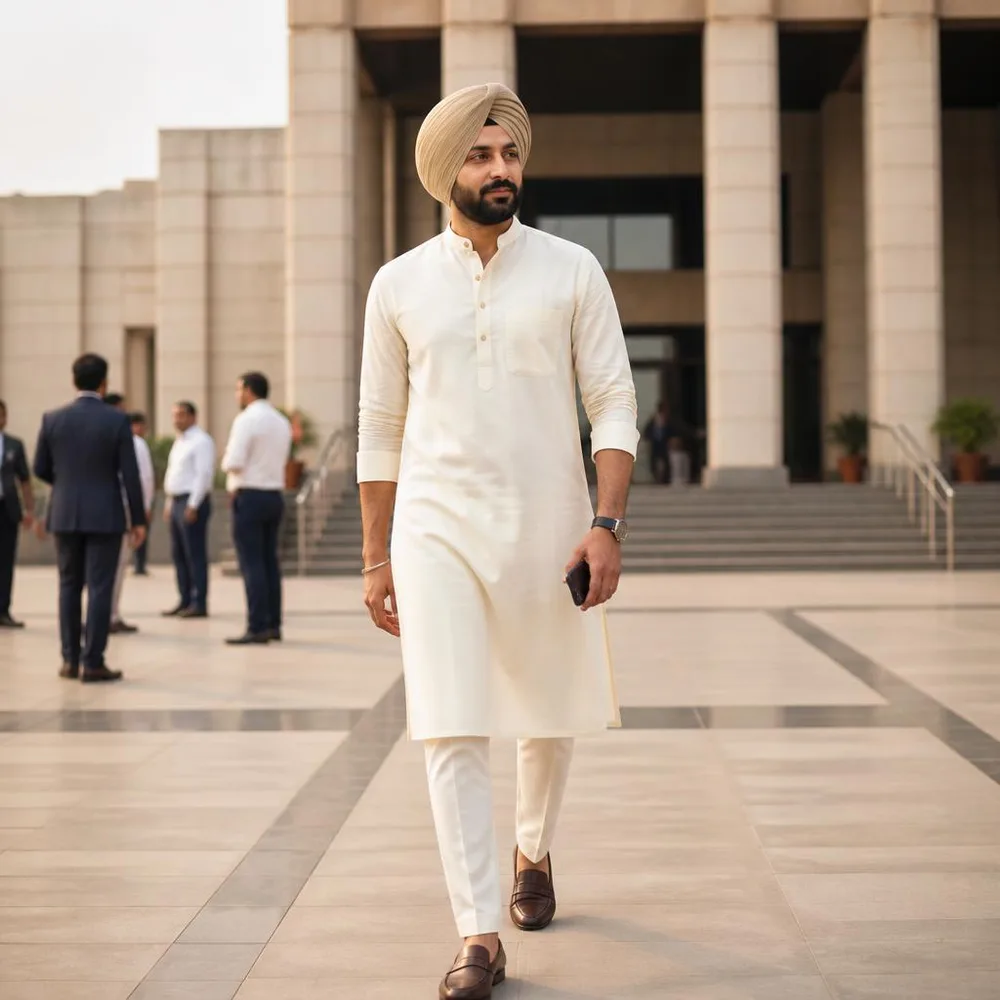
A civic event can place you in photographs, on a stage, or among people whose roles differ. The right level of formality depends on the invitation and your role, not on a generic idea of what public service should look like. Before selecting a kurta pajama, read the event information and ask the organizer whether there is a dress expectation.
Match the room, not an imagined rule
Consider whether you are attending as a guest, speaker, organizer, or recipient. A formal indoor ceremony may call for a more structured layer; a daytime public gathering may suit a simpler kurta. Avoid assuming that a particular colour or style communicates a political, religious, or civic position.
Let fit create polish
Check the collar, shoulder, sleeve, and hem in the position you will use most—standing at a lectern, sitting in the audience, or greeting people. A Muktsari style kurta can bring an expressive line while remaining composed when the rest of the outfit is restrained. Choose footwear you can stand in comfortably for the expected duration.
Consider microphones and photographs
If you will speak, check whether a microphone will clip to the garment and whether a pocket is needed. Avoid accessories that catch on equipment. For photographs, test how the cloth and colour appear in the event’s lighting. These small details are easy to overlook until the day.
Keep personal identity visible
Traditional menswear can feel appropriate in a formal public setting without making a political statement. Choose clothing that reflects your own background and comfort. If the event has an official dress code, follow it; if it does not, ask the host rather than treating an editorial guide as an authority.
For silhouette inspiration, consult the TS Namdhari Muktsari style guide. The existing Zirakpur local page—not a new article—remains the place for local “near me” comparisons.
Before you leave
Confirm the venue and role, check the invitation, test your microphone setup if relevant, and choose a complete outfit you can wear comfortably through the event.
Find out what “formal” means at this event
Civic occasions range from a daytime meeting to an evening reception or public ceremony. Ask the host or organizer about the expected formality, the venue, and whether there is a requested dress code. Do not assume every civic event calls for the same clothing. If the invitation is unclear, a short, respectful question is better than guessing from a photograph of a previous event.
Consider the role you will have. A speaker, family guest, volunteer, and award recipient may want different levels of formality. If photographs or a stage appearance are expected, ask about the background and lighting. This is not about dressing to attract attention; it is about choosing an outfit that feels appropriate and lets the wearer focus on the event.
Use proportion and finishing to set the tone
A cleanly finished kurta in a considered cloth can read as formal without heavy embellishment. A fuller Muktsari style kurta may be paired with a restrained pajama and a waistcoat if the wearer likes that look. The combination should not be treated as mandatory. Try the full outfit together and check that the layers sit comfortably while standing at a podium or sitting through a meeting.
Keep visible logos and slogans out unless the organizer has requested them and the wearer wants them. If a badge or event pin must be worn, test its placement so it does not pull at the cloth. Confirm whether the event has rules about insignia, photography, or the use of official marks.
Prepare for the practical details
Check the route, expected duration, seating, and weather. Choose footwear for the actual venue and a layer that can be removed without disrupting the outfit. If you will be carrying notes, a phone, or an event pass, test where they can be kept without making a pocket bulge. A discreet bag may be more comfortable than overloading the garment.
Make the final choice personal
Formal clothing does not have to erase Punjabi identity, and cultural clothing does not need extra ornament to appear considered. Ask the wearer which garment they feel confident in and what details carry meaning for them. If a family member suggests a particular colour or keepsake, let the wearer decide whether it belongs in this event.
For a discussion of Muktsari proportions, use the TS Namdhari guide. For dress expectations, rely on the event organizer. A good civic-event outfit is appropriate to the occasion, comfortable through its schedule, and recognizably the wearer’s own.
Before leaving
Try the complete look in the venue-like posture: standing, sitting, and speaking. Check the collar, sleeves, and hem; confirm the event details; and pack only what you need. A calm final check leaves more attention for the people and purpose of the event.
Check the practical requirements of the venue
Some civic venues have security checks, visitor badges, or restrictions on bags and photography. Check the invitation or organizer’s information before choosing accessories. A pocket or small bag should hold what the wearer needs without bulging or pulling on the kurta. If a badge must be pinned, ask where it should go and use a placement that does not damage delicate cloth.
Consider whether the event includes a stage, a long walk, or standing for photographs. Test the outfit in each posture and make sure the wearer can move naturally. If the kurta will be worn under a blazer or waistcoat, try the full combination to check the sleeves and collar.
Prepare without overcomplicating the look
Steam or press the garment only according to the known care guidance. Pack a lint brush and any necessary event documents separately from the clothing. Leave enough time to dress calmly and travel without sitting in a way that deeply creases the outfit.
At the event, follow the organizer’s directions about official insignia and photographs. A formal appearance is most effective when it lets the wearer participate comfortably and respectfully, without extra embellishment competing with the purpose of the gathering.