TS Namdhari Journal
Repair, Alter, or Restitch? Deciding What an Existing Punjabi Kurta Needs
A practical way to assess a well-worn Punjabi kurta: identify the problem, inspect the cloth, and discuss whether repair, alteration, or a new build makes sense.
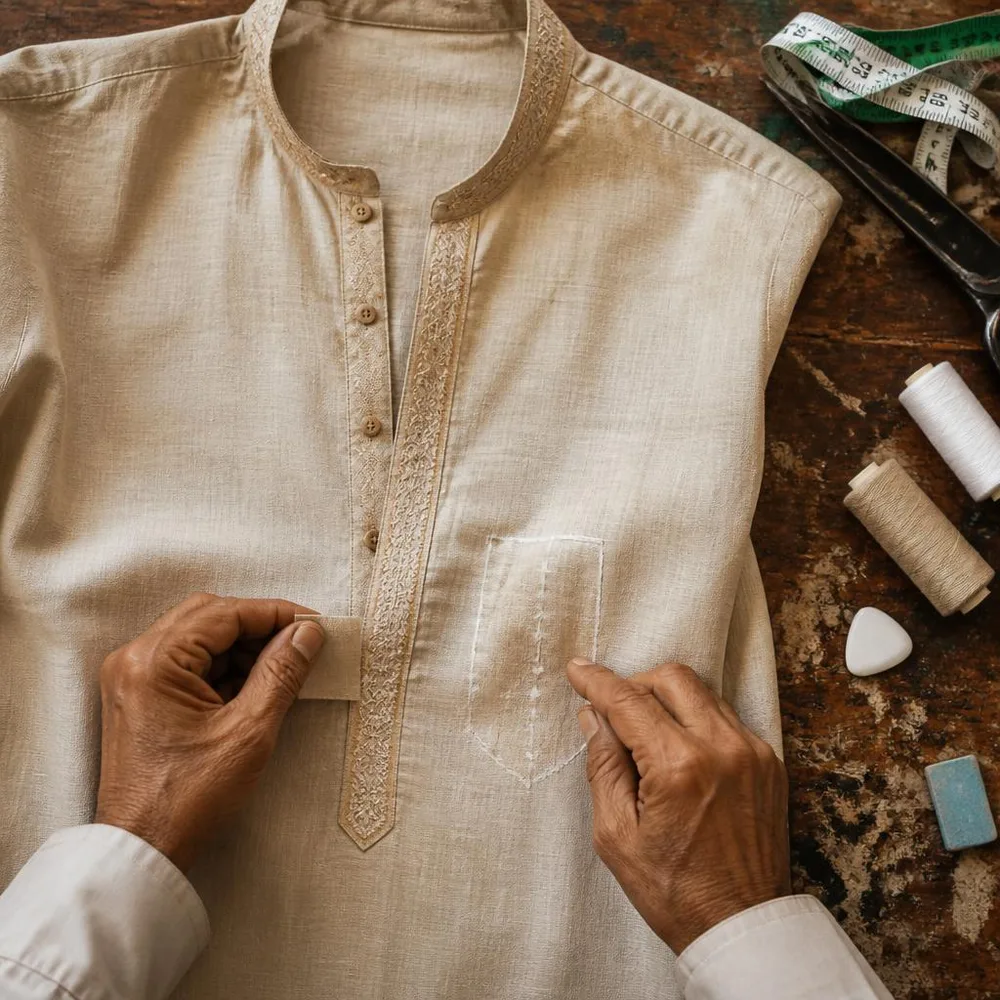
A Punjabi kurta that has been worn for years deserves a thoughtful assessment before anyone reaches for scissors. The right next step depends on where the problem sits: a seam may have opened while the cloth is still sound; the garment may no longer suit the wearer’s fit; or the fabric may be too weak for another round of stitching. Repair, alteration, and restitching are different choices, and none should be promised from a photograph alone.
First, describe what changed
Is the issue a loose button, an opened seam, a frayed edge, a stain, or a fit that restricts movement? Note when it occurs and whether it is isolated or repeated. A kurta that feels tight only when seated may need a different conversation from one with damage at a worn cuff.
Look at the cloth around the problem
Examine both sides in good light. Check for thinning, small tears, colour loss, previous repairs, or fabric that has become brittle. A small fix can be sensible when the surrounding cloth is stable. If the cloth is weak across a larger area, a neat repair may not last. Ask the tailor to explain what they can see and what remains uncertain.
Choose the least disruptive option that works
- Repair: address a local defect while preserving the existing shape.
- Alter: adjust proportions or ease when the cloth and seam allowances permit.
- Restitch: consider a new construction only when the old build or cloth no longer supports the desired fit.
These are general distinctions, not a guarantee that every garment can be changed. A family heirloom may also carry marks that the owner wants preserved. Say so before work begins.
Decide with the wearer
Try the kurta on and test sitting, walking, and reaching. If the garment matters emotionally, discuss what must remain untouched. A thoughtful choice may be a modest repair, a new Muktsari kurta inspired by the old one, or simply keeping the original as a memory.
For an existing style reference, see the TS Namdhari Muktsari kurta pajama guide. Ask the atelier to assess the actual garment and explain its terms; cost and feasibility depend on its condition.
A three-garment thought experiment
Consider three kurtas with three different problems. The first has a button that has come loose, but the cloth around it is sound. The second still has strong fabric, yet the wearer’s shoulders or preferred ease have changed. The third has thinning cloth across the underarm and side seam, with earlier repairs close together. The first may invite a local repair; the second deserves an alteration assessment; the third may not support the wearer’s requested fit without rebuilding or retiring it. These are examples, not a diagnosis of any specific garment.
Inspect the whole area, not only the visible tear
Turn the kurta inside out and examine the seam allowance, nearby cloth, lining if present, and any stress points. Look for repeated strain, small holes, fading, or brittle areas. A tiny opening can be the visible end of a longer weak section. If the cloth is old or sentimental, stop pulling at it and let a tailor inspect it gently. A photograph helps explain the concern but cannot show how the fabric behaves under tension.
Understand the limits of each option
A repair preserves the original shape but may remain visible. An alteration can change proportion only where the pattern and seam allowance permit. Restitching can create a new fit but may require more cloth than the original piece has. Each choice also changes the garment’s character. Ask what will be preserved, what will change, and which risks remain before approving work.
For family clothing, agree on the goal before discussing technique. Is the priority to keep the exact old shape, make the kurta wearable again, preserve a distinctive border, or create a new garment inspired by it? One goal may conflict with another. Naming the priority lets the tailor explain trade-offs honestly.
When a replacement is the kinder choice
Sometimes a cloth has reached the point where continued wear may cause more damage. A new kurta in a related colour or silhouette can carry the memory without pretending to be the same garment. If the wearer wants a fuller Muktsari kurta, use the existing TS Namdhari style guide as a reference while keeping the older piece safely stored.
Questions before you agree
- Which part of the cloth is strong enough to work with?
- Will the change be visible from the outside?
- Could a fitting reveal a different problem?
- What are the confirmed cost, timing, and alteration terms?
Those answers should come from an inspection of the actual garment. A careful tailor will explain uncertainty rather than promising that every cherished piece can be restored to its former condition.
Bring evidence to the assessment
When taking an older kurta to a tailor, bring it clean and dry if its care instructions allow, and point out previous repairs. If the garment has a story, say which parts must not be changed. A photograph of how it used to fit can help, but be clear that the wearer’s body or preference may have changed since then. The tailor needs to inspect the actual fabric before recommending a method.
Ask for the assessment in plain terms: what can be repaired, what may remain visible, and what could fail with continued wear? If the garment is too fragile for regular use, discuss preserving it as a keepsake instead of putting it under strain. A new garment can borrow a collar, colour, or proportion without claiming to be the same piece.
For a repair that matters emotionally, consider asking for a small sample or visible demonstration before work begins. Agree how the old thread or removed material will be handled. The goal is not a perfect restoration at any cost; it is an informed choice that respects the cloth and the wearer.
Choose a goal before the tailor chooses a method
Bring the wearer’s preferred outcome to the assessment. If the kurta is a keepsake, preserving its original shape may matter more than making it suitable for frequent wear. If the goal is everyday use, a visible but comfortable repair may be acceptable. These priorities can lead to different decisions even when the fabric condition is identical. Ask the wearer to choose what matters most and record that choice before discussing the work.
After the assessment, take time to consider the options rather than agreeing under pressure. A responsible decision may be to repair, alter, restitch, store, or leave the garment unchanged. The value of a careful inspection is that it gives the family enough information to choose without pretending every old garment can be restored.