TS Namdhari Journal
Tailoring for a Short Visit to Punjab: How Out-of-Town Customers Can Plan Ahead
If you are visiting Punjab briefly, clarify your garment brief, travel dates, fitting needs, and the atelier’s confirmed availability before travelling.
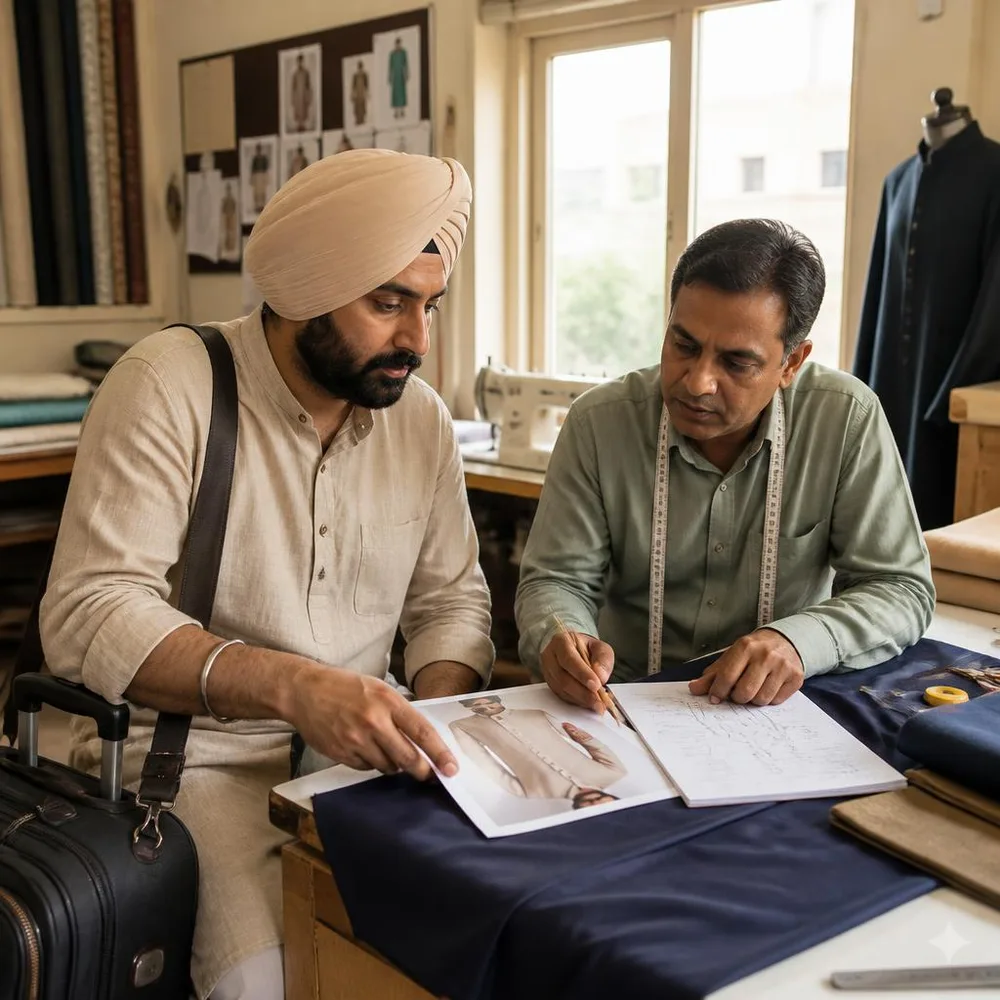
A short visit to Punjab can make a tailoring appointment feel like a narrow window. The first step is to confirm whether the atelier can meet you during the dates you will be there. Do not assume a visit, fitting, or finished garment can be arranged at short notice. Send a clear inquiry early, share your travel window, and wait for confirmation before planning around it.
Prepare a concise brief from home
Write down the garment, occasion, preferred silhouette, and any details that matter. Include two or three reference images, with a note about what each image shows. If you want a Muktsari style kurta, describe the fullness and length you prefer instead of assuming the same term means the same thing to everyone.
Ask what can realistically happen on the visit
Confirm whether an appointment is available, whether the wearer must attend, how many fittings may be needed, and what information or fabric should be brought. Ask whether a visit can begin an order or complete one; those are different outcomes. Timelines depend on the garment and the atelier’s current workload, so avoid booking return travel on an unconfirmed estimate.
Plan for fit and follow-up
Bring a well-fitting garment as a reference only if you are comfortable doing so. Note posture, movement needs, and the layers you expect to wear. Ask how later questions or adjustments are handled if you will be back home. Do not assume remote service or shipping is available unless the atelier confirms it.
Verify the practical details
Before travelling, confirm the exact address, appointment time, contact method, payment arrangements, and any current service terms directly with the business. Search results can be outdated. The existing TS Namdhari Zirakpur guide helps compare consultation questions, but it cannot confirm current availability.
A good visit starts with honest expectations. Keep your plans flexible until the tailor confirms the scope and timing, and make sure the wearer’s own preferences remain part of the brief.
Useful message to send
“I will be in the area from [date] to [date]. I am interested in [garment] for [occasion]. Is an appointment possible, and what can realistically be completed during that window?”
Make a time budget before you travel
List your arrival, departure, family commitments, and the hours that are genuinely available for tailoring. Then ask the atelier what steps are needed for the garment you want. A consultation, measurement, cloth selection, fitting, and handover may require separate time; do not assume that every stage can happen in one visit. Confirm the sequence directly and keep a buffer for travel delays.
If the trip is short, share that constraint at the first contact. Ask whether the tailor can assess the proposed design and schedule before you commit. Do not ask a business to guarantee a turnaround without knowing the cloth, style, current workload, and fitting needs. If the timing is not realistic, consider a less complex order, a later collection, or a future visit.
Send useful references, not private details without permission
A clear photograph of a garment you already own can help explain a preference. Include a full-length view and close details of the collar, sleeve, and hem. Say what you like and what you would change. Avoid sending photographs of another person or their measurements without their consent. A reference image cannot replace an in-person measurement or a conversation about comfort.
If you are ordering for a relative who will not travel with you, ask how the tailor handles that situation. A well-fitting garment or recent measurement notes may help, but they can be inaccurate. Make sure the wearer can approve the fit and design, whether at the visit or through another confirmed process.
Keep decisions and confirmations together
Store the agreed design, cloth choice, quote, date, and contact information in one message or order record. If family members are helping, name who can approve changes. Confirm any payment, cancellation, alteration, and collection terms with the business rather than relying on a past visit or a friend’s account.
Before leaving, ask how to contact the atelier if a question arises and whether the garment can be collected by an authorized person. Do not assume shipping or remote fitting is available; verify it first. If you cannot return for a fitting, ask what alternative review is possible and weigh the fit risk before proceeding.
Choose a style that fits the visit
A trip home can make a custom kurta feel especially meaningful, but the garment should still suit the wearer’s daily life. If a Muktsari silhouette is the goal, review the TS Namdhari guide before you arrive. Bring a short list of questions and leave space for the tailor’s assessment of what can be done within your time.
Good planning does not remove every uncertainty. It makes the open questions visible early enough to choose a comfortable path.
Use the first meeting to decide whether to proceed
Bring your schedule and the questions that matter most. Ask the tailor to assess the requested design, cloth, and available appointment windows before taking measurements or confirming an order. If the fit depends on a future try-on, ask how that step would work after you leave. A clear answer may reveal that a simpler garment or a later visit is the better choice.
Keep travel plans flexible until the atelier confirms what can be completed. Do not book a flight or promise a garment for a ceremony based on an informal estimate. If the business can only confirm a date after inspecting the cloth or workload, wait for that confirmation before making commitments.
Give the wearer a say from a distance
If you are ordering on someone else’s behalf, arrange a call or message where the wearer can confirm colour, length, and fit preferences. Share reference images with permission. A family member can collect the garment only if the atelier agrees and the wearer is comfortable with that arrangement. Confirm any remote review or delivery terms directly.
Save the final design notes and take a photograph at handover, with the wearer’s consent. If a future visit is possible, those records can help start the next conversation without requiring the family to reconstruct every detail.