TS Namdhari Journal
What Does “Muktsar Wale” Mean in Punjabi Tailoring?
A careful look at the phrase “Muktsar Wale” as a marker of place and belonging, kept distinct from a guide to the Muktsari kurta silhouette.
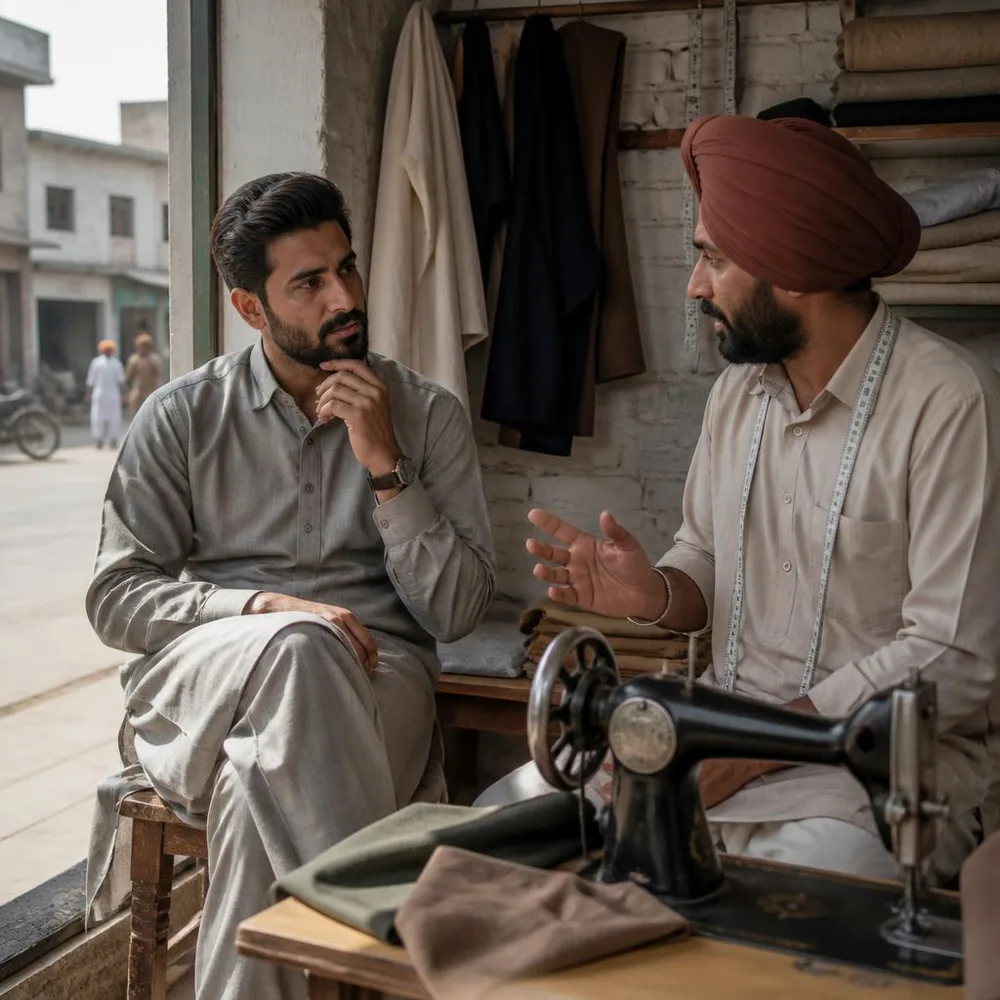
“Muktsar Wale” is a phrase people may use to signal a connection with Muktsar—through family, residence, memory, or community. The exact meaning depends on who says it and the context around it. In a tailoring conversation, the phrase can be a personal reference point, but it should not be treated as a fixed technical description of a garment.
Place can be part of a clothing story
Someone may mention Muktsar because they grew up there, because relatives still live there, or because a particular family occasion is connected to the town. Another wearer may use the same words differently. Ask what the place means to the person rather than assuming that one phrase tells you their preferred fit, fabric, or design.
Keep identity separate from a cut
A place-name can point to identity; a garment brief needs more detail. If the wearer wants a Muktsari style kurta, describe the line, fullness, length, and movement they have in mind. If the phrase refers to family memory, explain that story. The existing TS Namdhari guide to the Muktsari kurta pajama owns the silhouette and style-guide topic; this article is about language and context, not a competing style guide.
Ask instead of translating for someone
Punjabi expressions carry nuance, and a literal translation can miss tone or belonging. If you are writing a caption, interviewing a relative, or briefing a tailor, ask the speaker how they want the phrase understood. Preserve their chosen spelling and explanation. Do not turn a personal identity into a marketing label without permission.
Let the wearer lead the design
Family stories can inform a garment through a remembered colour, a familiar proportion, or a detail the wearer chooses to include. None of those choices needs to be presented as a rule for everyone from Muktsar. The most respectful design conversation begins with a question: “What would you like this connection to mean in the garment?”
That answer can guide a modern piece without making unsupported claims about the town, its residents, or the history of Punjabi dress. For practical tailoring, record the wearer’s own words and then translate them into agreed design choices.
Questions to keep in mind
Does “Muktsar Wale” describe one kurta style? Not by itself. Ask the speaker what they mean.
How is this different from Muktsari kurta guidance? This article is about phrase and identity; silhouette guidance stays on the existing Muktsari page.
Why a phrase needs its speaker
Place-related expressions can carry belonging, affection, humour, pride, or simply a factual connection. Which of those meanings is intended cannot be determined from the words alone. The same phrase may sound different when spoken by someone who lives in Muktsar, someone whose family moved away, or someone who is quoting a relative. Context and tone matter, and an article cannot replace the person’s own explanation.
For that reason, this guide avoids turning “Muktsar Wale” into a technical garment category. It does not tell the reader how every person from the town dresses, nor does it define a universal “Muktsar style.” The existing TS Namdhari page on the Muktsari kurta pajama is the owner for silhouette guidance; the two topics should remain separate.
How to ask about the phrase respectfully
If you are interviewing a family member, begin with an open question: “What does that phrase mean to you?” Follow with “When would you use it?” and “Is there a spelling or transliteration you prefer?” Let the speaker answer in their own words. Do not correct pronunciation or translate a personal expression into a marketing line without permission.
In a tailoring conversation, the phrase can be a starting point for a story, not a finished design brief. Ask whether the wearer wants a specific proportion, colour, fabric, or family detail. If the answer is “it reminds me of home,” ask which part of the memory they want to carry. The garment should reflect that person, not an assumption made by the tailor.
Writing it down without flattening it
Punjabi can be written in different scripts and transliterated into English in more than one way. Before publishing a caption or quote, ask the speaker how they prefer the phrase to appear. Preserve their explanation and attribution if they want their name attached; if they prefer privacy, do not imply that the line came from a customer. A language reviewer familiar with the local usage should check spelling and nuance.
This matters especially when a phrase is connected to a place with a living community. A neat English translation can be convenient, but it can also erase the warmth or ambiguity that the speaker intended. When a garment is made from that story, keep the person’s choice visible and the marketing claim modest.
Keep search intent clear
Readers looking for the meaning of a phrase should find a language-and-identity explanation. Readers comparing a Muktsari kurta silhouette should go to the established style guide. Linking the two helps a visitor move between related questions without creating two pages that compete for the same “Muktsari style kurta” search.
Keep a family phrase attached to its story
If someone explains that the phrase reminds them of a particular person or place, ask whether they want that story recorded. Do not add a customer’s words to a website, garment label, or social caption without permission. A quotation can be identifying even when a name is removed, especially in a close-knit community. Offer the speaker a chance to review the wording and spelling before it is published.
For an article or product page, separate a verified explanation from an editorial interpretation. A sentence such as “Our customer describes the phrase as…” clearly attributes a personal meaning; a sentence such as “The phrase means…” makes a broader claim that needs stronger support. If no reliable source or reviewer is available, keep the explanation modest and say that usage varies.
When the phrase inspires a garment, ask what should be carried forward. It may be a colour, a memory, a shape, or simply the feeling of returning home. The answer could also be “nothing specific; I just like the sound.” Respect that answer. A personal phrase does not need to become a commercial theme to have value.
A note for language reviewers
Ask a local Punjabi reviewer to confirm the wording, script, transliteration, and whether the context is respectful. Give the reviewer the full paragraph, not only the phrase, so they can judge how it is being used. Record the review date and any preferred spelling before the page is published.